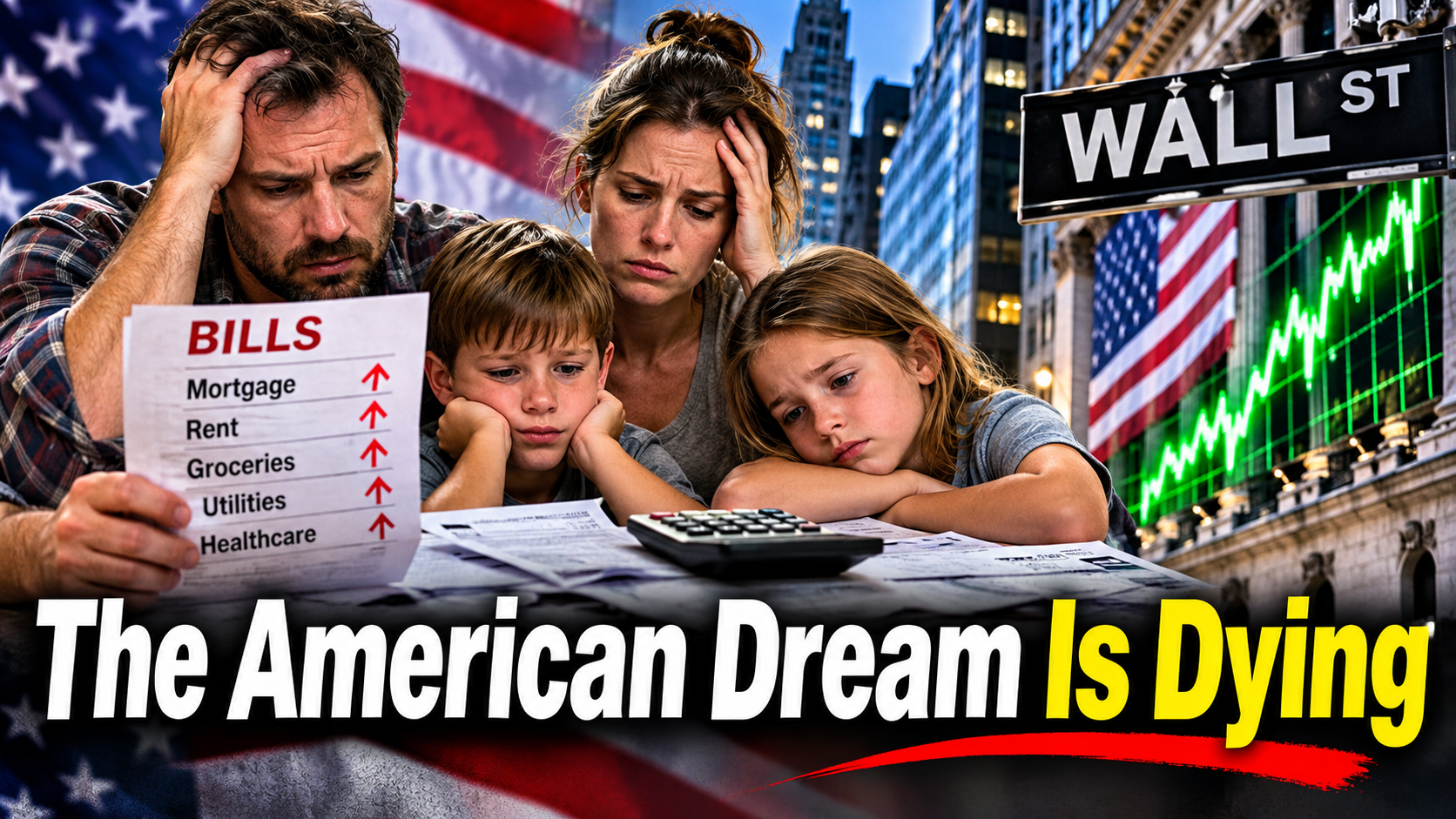
What good is a booming economy when the people keeping it alive can barely afford to live in it?
There was a time when the American dream meant something tangible. A steady job, a modest home, food on the table, a family vacation and enough money put aside to retire with dignity.
Today, for millions of Americans, that dream feels increasingly like a financial fantasy.
People are working, paying taxes and sacrificing their personal time, yet many find themselves struggling to achieve the same financial security that previous generations enjoyed.
Meanwhile, rising stock markets and economic growth are celebrated as evidence of prosperity.
But prosperity for whom?
When One Paycheck Could Support a Family
During the decades following the Second World War, expanding industries, relatively affordable housing and growing wages helped many American families establish a comfortable middle-class existence.
A factory worker, mechanic or ordinary office employee could realistically aspire to homeownership without necessarily requiring two full-time household incomes.
Those decades were far from perfect. Racial discrimination, unequal employment opportunities and economic exclusion prevented many Americans from sharing equally in that prosperity.
Nevertheless, the economic opportunities available to many ordinary workers during that period stand in stark contrast to the affordability challenges facing households today.
The promise was relatively straightforward: work hard, live responsibly and build a better future.
For many people today, hard work alone no longer guarantees that outcome.
The Brutal Reality of Housing Affordability
Harvard University’s 2026 State of the Nation’s Housing report reveals just how dramatically the financial landscape has changed.
Existing home prices nationwide have climbed approximately 54 percent since 2020. In 2025, the median existing single-family home cost nearly five times the median household income, compared with approximately 3.2 times during the 1990s.
The situation for renters is equally disturbing.
In 2024, approximately 43.5 million American households were spending more than 30 percent of their income on housing. Of those, 21.6 million were spending more than half.
Think about that.
Before buying groceries, paying for transportation, purchasing medication or putting money aside for retirement, millions of households are already surrendering more than half their income simply to keep a roof over their heads.
How can anyone build financial independence under those circumstances?
Wall Street’s Prosperity Is Not Everyone’s Prosperity
A rising stock market does not automatically translate into a better standard of living for the average American.
Federal Reserve data from the second quarter of 2026 shows that the wealthiest 10 percent of American households held approximately 88 percent of corporate equities and mutual fund shares measured in its distributional accounts.
The bottom 50 percent held less than one percent.
Although ordinary workers can benefit from investments through retirement accounts and pension plans, the distribution of financial assets remains remarkably unequal.
This helps explain why impressive financial market performance can coexist with widespread household financial insecurity.
A stock market rally cannot pay the grocery bill of someone who owns no stocks.
Economic Growth Without Financial Freedom
Gross domestic product measures economic activity. It does not tell us whether an elderly person can afford medication, whether a young couple can purchase their first home or whether a working family can survive an unexpected financial emergency.
Economic growth matters, but so does the distribution of its benefits.
Housing shortages, borrowing costs, wage pressures and rising household expenses all deserve serious examination.
The questions that should accompany every discussion of economic prosperity are simple:
- Can ordinary workers afford a home?
- Can families survive without accumulating excessive debt?
- Can seniors retire without fearing poverty?
- Can younger generations realistically build a better future?
- Is working harder actually improving people’s lives?
These are the conversations that deserve as much attention as Wall Street’s latest performance.
Final Thoughts
Perhaps the greatest tragedy of the modern American dream is that people haven’t stopped working toward it. They’ve simply watched the finish line move further away.
They work longer, postpone retirement, sacrifice family time and struggle to accumulate the financial security they were told hard work would deliver.
The past cannot be recreated exactly, nor should its injustices be forgotten. But the aspiration of ordinary people achieving a comfortable life through honest work should never become an outdated concept.
A country’s prosperity should ultimately be reflected in the lives of its citizens, not merely in financial markets.
Because when wealth accumulates at the top while millions struggle below, celebrating economic success without examining who benefits tells only half the story.
The American dream should belong to the people who build America — not exclusively to those who own shares in it.
About the Author