Americans are buying emergency supplies, military bases are preparing to survive without the civilian power grid, and a string of technology failures has shaken public confidence. Washington says there is no coming catastrophe. But the deeper question is whether America has become dangerously dependent on systems that can fail without warning.
The Panic Is Real. The Predicted Blackout Isn’t.
Something strange is happening across America.
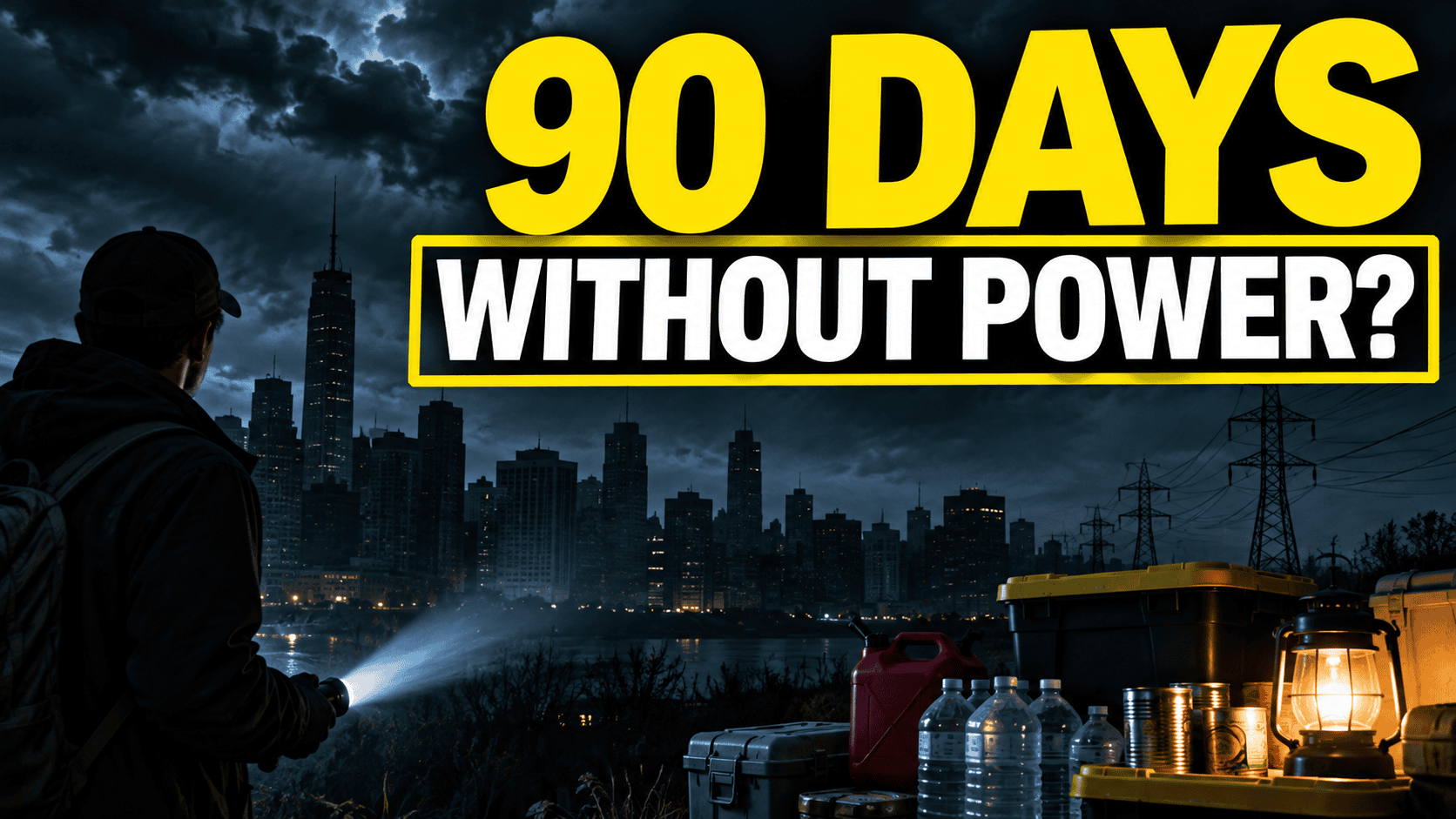
People are filling shopping carts with bottled water, canned food, batteries, generators and emergency supplies. Not because a hurricane is approaching. Not because a blizzard is forecast.
Because millions of people have been exposed to warnings that the nation’s power grid could collapse.
According to CBC News reporting published November 20, emergency stockpiling has accelerated following a series of major technology disruptions. Walmart, Costco and emergency supply retailers have reported unusual demand.
And while Washington is telling Americans to relax, some households have apparently decided they’d rather trust a pantry full of supplies than another government reassurance.
But here’s where the story gets interesting.
There is no credible evidence that a nationwide 90-day blackout has been scheduled or is imminent. Viral claims predicting a November 17 shutdown were false, including manipulated footage purporting to show President Donald Trump announcing a catastrophe. PolitiFact
The rumours were manufactured.
The vulnerabilities that make people nervous, however, are not imaginary.
The Pentagon Is Preparing for Something Serious
In September, the Pentagon announced an initiative called FORTRESS America, designed to strengthen the ability of military installations to operate independently during major infrastructure disruptions.
The plan includes preparing bases to maintain operations for at least 90 days without outside support.
Think about that.
America’s military is strengthening its ability to function if civilian electricity and essential supply systems become unavailable.
That does not mean the Pentagon knows a blackout is coming. Military contingency planning is not a prediction.
But it does mean prolonged infrastructure failure is a scenario defence planners consider serious enough to prepare for.
And that raises an uncomfortable question.
If maintaining independent power is important enough for military bases, why shouldn’t ordinary Americans take household preparedness seriously?
When the Digital World Starts Breaking
The fear didn’t develop in a vacuum.
Recent disruptions have affected Microsoft services, air travel, banking platforms and even a classified National Security Agency communications network.
These incidents have exposed how dependent modern life has become on interconnected technology.
One failure can interrupt payments. Another can ground aircraft. A third can prevent people from accessing services they assumed would always be available.
U.S. officials say the recent incidents were unrelated and that there is no evidence of a coordinated cyberattack.
That distinction matters.
But so does the broader lesson.
A society that depends on electricity, internet connections and digital payments for nearly everything has built enormous convenience on top of potentially fragile infrastructure.
When those systems stop working, even temporarily, ordinary people can find themselves remarkably powerless.
Washington Says Relax. Americans Are Buying Generators.
President Trump and Vice President JD Vance have publicly dismissed suggestions that Americans need to prepare for an impending nationwide disaster.
Yet the public response tells another story.
CBS News reported that sales of water purification tablets rose 154% over a four-week period ending November 1 compared with the previous year. Retailers also observed growing interest in generators, food supplies and other emergency equipment.
Some of that demand is being driven by misinformation.
Some is likely a rational response to watching critical services fail.
And some reflects a problem politicians rarely seem eager to confront: public confidence cannot simply be ordered back into existence.
When people no longer feel certain that essential services will work tomorrow, they begin making their own contingency plans today.
That isn’t necessarily paranoia.
Sometimes it’s common sense.
Preparing for Disaster Is Not the Same as Predicting One
There is an enormous difference between preparing for a possible emergency and claiming to know one is coming.
Households don’t need underground bunkers or three months of expensive survival equipment to begin reducing their vulnerability.
A reasonable supply of drinking water, non-perishable food, medication, lighting, backup power for essential devices and emergency information can make a genuine difference during an outage.
Emergency preparedness experts recommend practical planning rather than panic buying. Some suggest maintaining enough essentials for seven to fourteen days where feasible.
No one needs a fabricated doomsday prediction to justify being prepared.
Dark Final Thoughts
Here’s what bothers me most about this story.
We’ve built a civilization where almost everything depends on systems ordinary people neither control nor fully understand.
Your money is digital. Your communications are digital. Your food supply depends on electricity, fuel and transportation networks.
And when something breaks, you’re expected to sit quietly and wait for somebody in authority to tell you everything is fine.
Maybe everything is fine.
Maybe the recent failures really are unrelated.
But there’s nothing irrational about wanting a backup plan.
The real danger isn’t that Americans are buying emergency supplies. It’s that so many essential parts of modern life have become difficult to survive without.
And if the lights ever do go out for longer than expected, government reassurances won’t charge your phone, refrigerate your food or put drinking water in your kitchen.
Preparedness isn’t proof of a conspiracy.
It’s what happens when people recognize that even the most powerful systems in the world can fail.
Sources:
- CBS News — Emergency supply sales and technology outages (November 19, 2026)
- PolitiFact — False claims about a nationwide blackout (November 16, 2026)
- The Washington Post — Outages and emergency preparedness (November 19, 2026)
About the Author