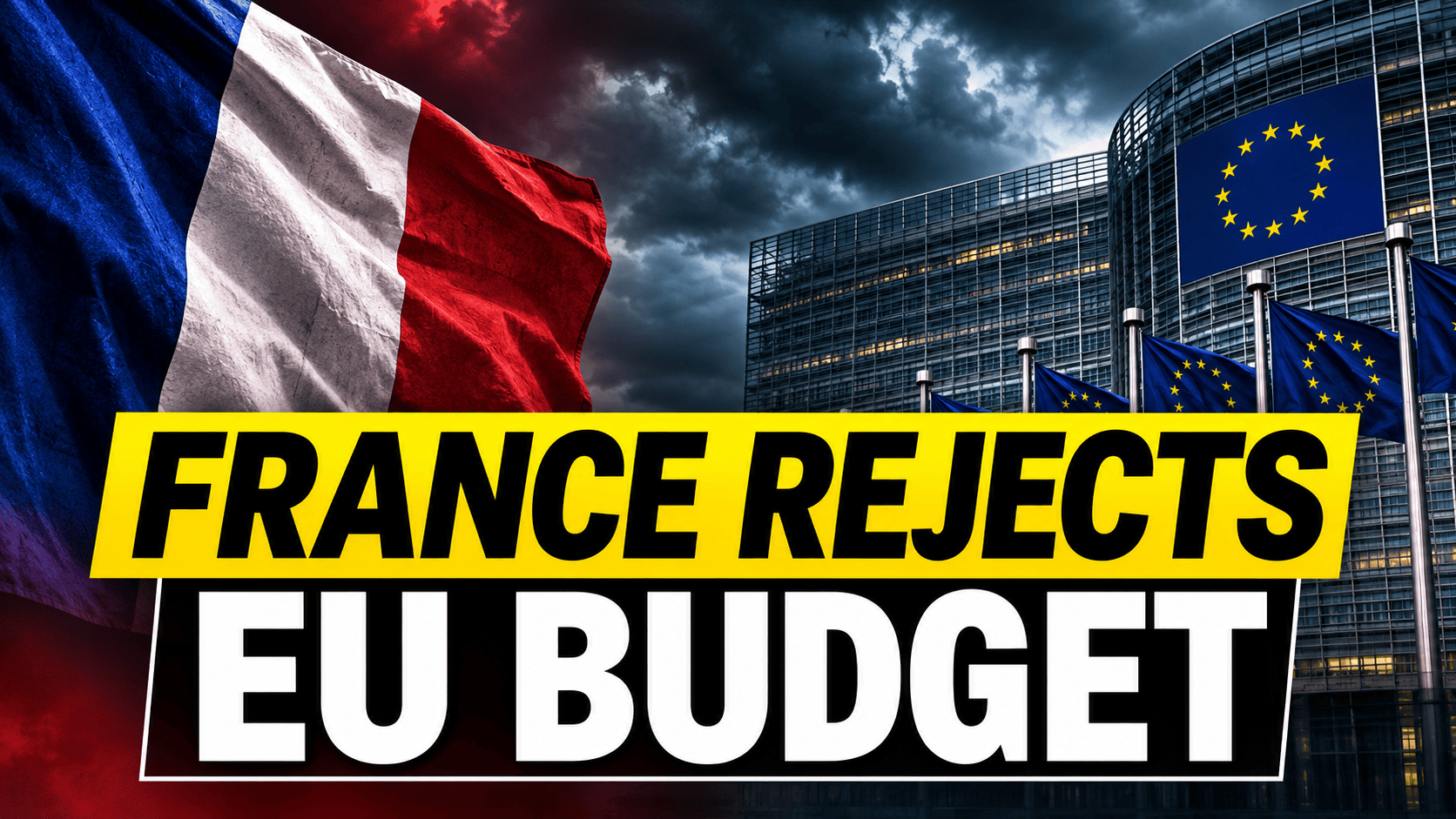
France has delivered a sharp rejection of the European Union’s proposed seven-year budget, exposing a growing dispute over agricultural support, military spending and who ultimately pays for Brussels’ expanding ambitions.
Original reporting and analysis | Europe • Economy • EU Budget
Brussels Has a Budget Problem — and France Isn’t Staying Quiet
The European Union wants to spend more on defence, technology, border security and global influence. But one of its most influential members has just delivered an unmistakable message: the latest financial blueprint isn’t good enough.
On Saturday, November 21, the French presidency sharply criticized the proposed EU budget for 2028–2034, describing it as deeply disappointing and warning that it fails to adequately protect agricultural funding.
At the centre of the dispute is the Common Agricultural Policy, the long-standing system of subsidies and income support designed to sustain European farming.
France argues the latest proposal does not sufficiently guarantee farmers’ incomes.
And Paris isn’t merely requesting a few adjustments. The French presidency declared that the proposal, in its current form, cannot serve as the foundation for an agreement.
That’s a serious obstacle for a European Union that requires unanimous approval from its 27 member states for its long-term financial framework.
More Money for Defence, Less Room for Compromise
European Council President António Costa presented the revised budget proposal on Saturday, arguing that it balances Europe’s strategic ambitions with the financial concerns of member governments.
His plan would increase defence funding by 232% compared with the current seven-year budget, while boosting competitiveness spending by 120%.
Funding for migration management and border control would double.
Costa also proposed increasing research funding through Horizon Europe by 57%.
Those figures reflect a significant shift in European priorities.
Brussels is attempting to strengthen its military capabilities, compete economically with China and the United States, and reduce vulnerabilities in an increasingly unstable international environment.
But expanding strategic ambitions comes with difficult choices.
Money directed toward new priorities must be financed through additional revenue, larger national contributions, or reductions elsewhere.
France’s objections illustrate how difficult those trade-offs become when national economic interests collide with collective European objectives.
A €1.58 Trillion Plan — and New Revenue Demands
The revised budget would total approximately €1.58 trillion in constant 2025 prices, roughly 10% below the European Commission’s original proposal.
Yet the plan would still represent a substantial increase over the current seven-year framework.
Costa has proposed several new revenue sources, including levies associated with digital services, tobacco products, electronic waste and carbon emissions.
Together with existing revenue streams, the proposed arrangements could generate approximately €60 billion annually.
National contributions would also rise modestly, from an average of 0.80% to 0.82% of member states’ gross national income.
Costa argues these measures would keep the financial burden manageable while allowing Europe to pursue its priorities.
But the political disagreement is not simply about the total amount.
It is about where the money goes, which industries receive protection and how governments justify those choices to their citizens.
Europe’s Farmers Are Back at the Centre of the Fight
Agriculture remains politically sensitive throughout Europe, particularly in France, where farming plays an important economic and cultural role.
The EU’s agricultural subsidies help support farm incomes, rural communities and food production.
Costa maintains that agriculture and regional cohesion would remain central elements of the proposed budget.
France, however, says those assurances are insufficient.
That disagreement matters because agricultural support is not simply another line in a financial document. Changes to funding arrangements can affect farmers’ financial security and governments’ relationships with rural communities.
The precise consequences will depend on the final allocation rules, which remain under negotiation.
Dark Final Thoughts: Who Gets Protected When Brussels Sets Its Priorities?
The emerging EU budget confrontation raises a question that deserves serious public scrutiny.
When governments promise stronger defence, greater competitiveness and more international influence, how do they ensure existing commitments to ordinary citizens are not weakened?
France is demanding stronger protections for agricultural income. Costa is defending a broader strategic spending programme.
Both positions reflect competing priorities within a budget that must satisfy 27 governments.
The coming negotiations will determine whether those priorities can coexist.
And beneath the technical language of financial frameworks, revenue mechanisms and spending envelopes lies the issue that matters most:
When Europe’s leaders decide where trillions of euros should go, who ultimately benefits — and who is expected to carry the cost?
Sources
- Reuters — French presidency rejects latest EU budget proposal, November 21, 2026
- European Council — President Costa’s official budget proposal and spending priorities
- Financial Times — Revised EU budget and proposed digital services tax
About the Author