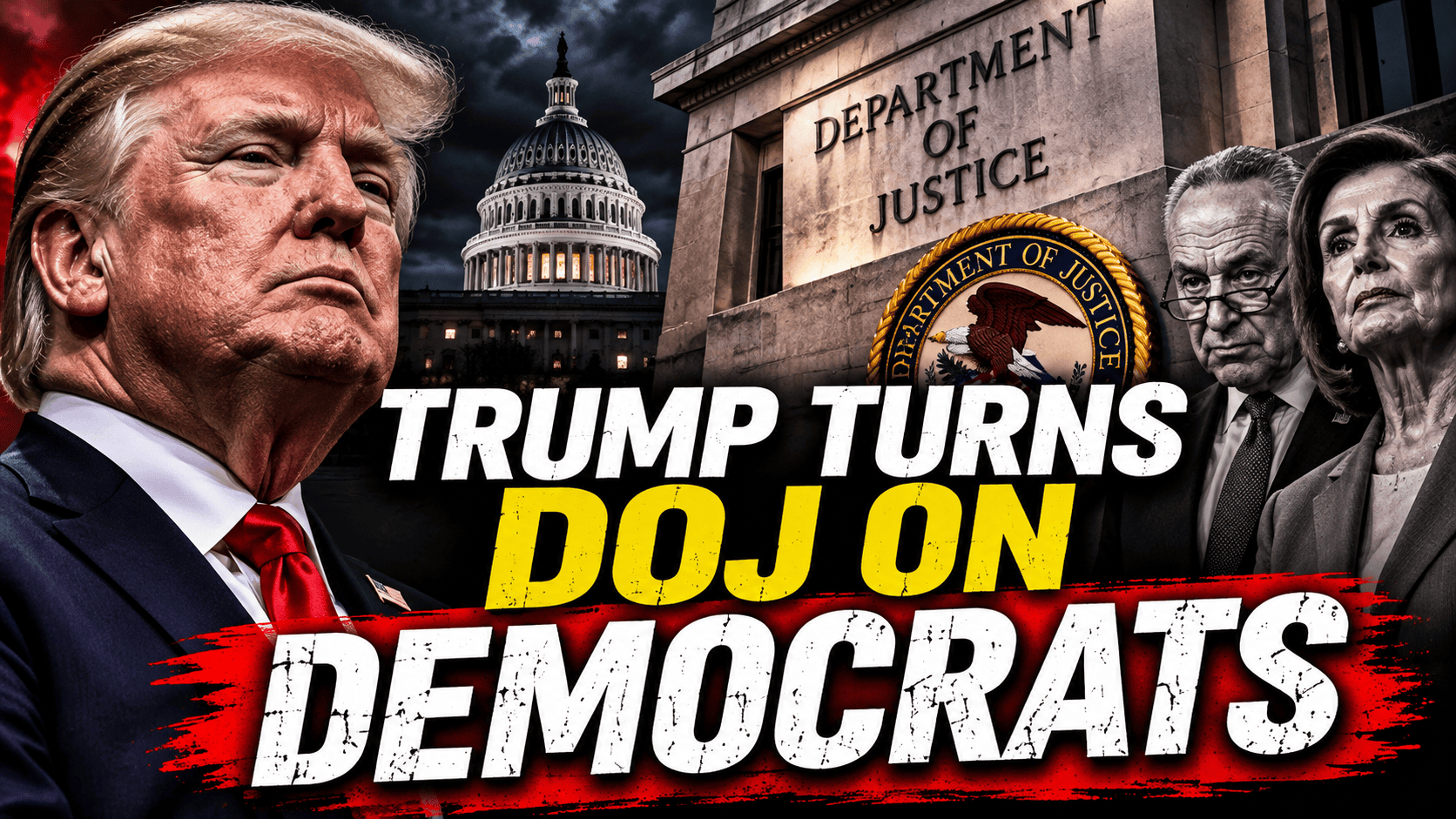
Democrats win control of Congress and promise investigations. Trump responds by directing the Justice Department to examine his political opponents, raising questions about accountability, retaliation and the limits of presidential power.
WASHINGTON — The November midterm elections delivered a major political defeat to President Donald Trump and his Republican Party. But the confrontation unfolding afterward could prove just as consequential.
On Saturday, November 7, Trump directed the U.S. Department of Justice to investigate Democrats who have threatened impeachment proceedings and other consequences against members of his administration.
The president accused Democratic lawmakers of engaging in criminal intimidation and extortion. He provided no public evidence establishing that a crime had occurred.
The announcement came just days after Democrats won control of Congress, giving them the authority to pursue investigations into the Trump administration when the new Congress takes office in January.
Washington is now confronting a fundamental question: Where does legitimate congressional oversight end, and political intimidation begin?
Democrats Prepare to Investigate the Trump Administration
Following their midterm victories, Democratic leaders outlined plans to investigate administration policies, financial relationships and potential abuses of government authority.
Their proposed inquiries include donations connected to Trump’s White House ballroom project and other activities involving administration officials.
Congress possesses constitutional oversight powers, including the ability to request documents, conduct hearings and pursue impeachment proceedings.
______________________________________________
🔴 Help keep this independent voice alive and uncensored.
Support independent journalism and help keep Chris Wick News going.
👉 Support Chris Wick on GoFundMe
Those powers do not automatically make every investigation justified. Congressional inquiries can themselves become politically motivated or excessive.
But threatening lawful investigations is not, by itself, proof of criminal conduct.
That distinction now sits at the centre of the confrontation.
Trump Accuses Democrats of Criminal Threats
Trump alleged that Democrats had been sending threatening letters to administration officials and other individuals.
He characterized their conduct as criminal and directed federal authorities to examine it.
Among those singled out was Michigan Democratic Senator Elissa Slotkin.
Slotkin previously argued that individuals considering employment in the Trump administration should understand they could face future congressional scrutiny.
Republican Senator Mike Lee criticized her comments as threatening. Slotkin rejected that interpretation, maintaining that people who violate the law or misuse taxpayer funds should face accountability.
The Justice Department previously investigated Slotkin and several other Democratic lawmakers over a video urging military and intelligence personnel to refuse illegal orders.
A grand jury declined to indict them.
As of Reuters’ November 7 reporting, the Justice Department had not publicly responded to requests for comment about Trump’s latest directive.
The Justice Department Faces a Political Test
The dispute raises competing concerns.
Republicans argue that Democrats are using the prospect of investigations and impeachment to intimidate administration officials and political supporters.
Democrats maintain that congressional oversight is necessary to investigate potential wrongdoing and hold public officials accountable.
Both positions require evidence.
A genuine criminal threat should be investigated regardless of political affiliation. Equally, a lawful congressional investigation should not become grounds for criminal prosecution merely because it threatens those currently holding power.
The critical issue is whether investigators can identify specific unlawful conduct rather than relying on political accusations.
Final Thought: Who Holds the Powerful Accountable?
The United States now faces an unusual confrontation between a president and an incoming Congress controlled by his political opponents.
Democrats are preparing investigations. Trump is calling for federal scrutiny of Democrats.
Each side accuses the other of abusing power.
The danger is that legitimate accountability could become indistinguishable from political retaliation in the public’s eyes.
The standard should remain the same regardless of who controls the White House: evidence, due process and equal application of the law.
If congressional oversight can trigger criminal investigations without evidence of wrongdoing, what happens to the independence of Congress? And if oversight becomes political intimidation, who holds Congress accountable?
Those are questions Washington needs to answer before the next confrontation begins.
Sources
- Reuters — Trump orders DOJ to look into Democrats for ‘threatening’ people (November 7, 2026)
- Associated Press — House Democrats plan vast oversight of Trump administration. Impeachment is an option
- Fox News — Trump orders DOJ probe into Democrats over alleged threats against administration officials