Britain spent years arguing over whether to leave the European Union. Now, six years after formally walking away, the country’s prime minister is asking a question that many politicians had hoped was settled.
What if Brexit never delivered what Britain was promised?
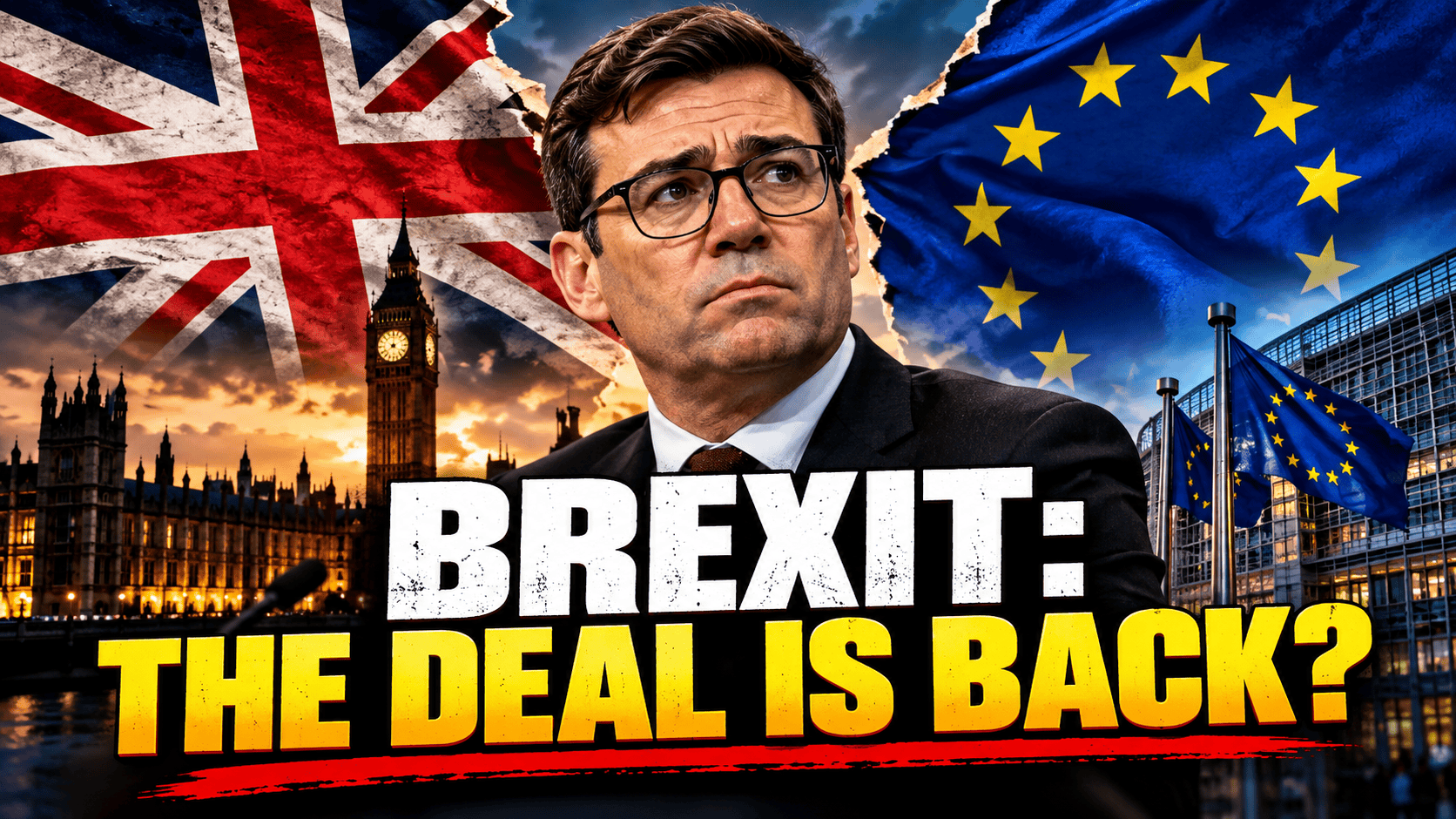
Prime Minister Andy Burnham is pushing for a fresh examination of Britain’s relationship with Brussels, arguing that closer cooperation with the European Union could revive economic growth, improve immigration enforcement, and address some of the difficulties created by the country’s departure.
But beneath the diplomatic language lies a much bigger debate.
How much control should Britain be willing to share with Brussels in exchange for economic opportunities? And who gets to decide where cooperation ends and political integration begins?
Burnham Wants Britain to Reconsider Its Relationship With Europe
On October 12, Burnham brought the question of Britain’s future relationship with the European Union back before Parliament.
His argument is straightforward: Britain should not reject the possibility of a better agreement simply because Brexit remains politically divisive.
The prime minister, who supported remaining in the EU during the 2016 referendum, has argued that leaving the bloc caused more harm than benefit.
His government believes closer cooperation could help businesses, improve trade arrangements, and strengthen efforts to tackle illegal immigration.
______________________________________________
🔴 Help keep this independent voice alive and uncensored.
Support independent journalism and help keep Chris Wick News going.
👉 Support Chris Wick on GoFundMe
That marks a departure from former Prime Minister Keir Starmer’s more cautious approach to reopening the broader Brexit debate.
Burnham has also raised the possibility of considering options that go beyond limited cooperation, including participation in European trading arrangements or potentially rejoining the EU itself.
That does not mean Britain has decided to reverse Brexit. It means the government is willing to examine possibilities that previous political leaders were reluctant to put back on the table.
And that distinction matters.
The Economic Argument: Can Brussels Really Fix Britain’s Problems?
Supporters of closer European cooperation point to the additional paperwork, border procedures, and trading complications that followed Brexit.
Businesses exporting goods to Europe have faced new administrative requirements, while industries dependent on cross-border supply chains have had to adjust to a different commercial environment.
A closer agreement could reduce some of those obstacles.
But economic cooperation is not automatically the same thing as economic recovery.
Britain also faces domestic challenges involving productivity, investment, infrastructure, public finances, and the cost of living.
A new arrangement with Brussels might address some trade-related difficulties without resolving those underlying problems.
There is another question that deserves attention.
What would Britain have to offer in return?
Access to European markets can come with regulatory obligations, financial contributions, or commitments affecting domestic policymaking.
The precise trade-offs would depend on the agreement being negotiated.
A limited trade arrangement would be very different from joining the EU single market, entering a customs union, or becoming a full member again.
Those options should not be treated as interchangeable.
If politicians promise economic benefits, the public deserves to know the likely costs, obligations, and limitations before being asked to support a new direction.
Immigration Could Become the Most Difficult Part of the Negotiations
Immigration was one of the central issues behind the 2016 Brexit referendum.
For many Leave voters, the ability to determine Britain’s immigration policies independently was an important reason for supporting departure.
Burnham now argues that closer cooperation with European governments could improve immigration enforcement.
There is a practical argument for that position.
Cross-border intelligence sharing, cooperation against smuggling networks, and agreements concerning migrant returns can involve multiple governments working together.
But cooperation on immigration enforcement is not necessarily the same as accepting the EU’s freedom-of-movement rules.
That difference will be central to any serious negotiations.
A government could seek closer enforcement cooperation while maintaining national immigration controls. More extensive economic integration, however, could introduce additional obligations.
The public needs to understand which arrangements are being proposed.
Otherwise, an argument about improving border enforcement could become another political dispute over national sovereignty.
Rejoining the European Union Is Not a Simple Reset Button
Some supporters of closer European ties believe Britain should eventually return to full EU membership.
That would be a far more consequential decision than negotiating improvements to existing trade arrangements.
Britain would not simply resume its former membership on the same terms.
Any future accession would require negotiations with the European Union and approval under the bloc’s membership procedures.
Questions involving financial contributions, regulations, the euro, and Britain’s former special arrangements could become major negotiating obstacles.
European leaders have shown varying degrees of openness toward a British return, but political encouragement does not amount to an agreed accession package.
And there is the matter of public consent.
The 2016 referendum produced a vote to leave. Public attitudes have since changed, according to several opinion polls, but the level of support depends partly on how the question is framed and what conditions are attached.
Supporting closer cooperation is not necessarily the same as supporting full membership.
A government considering such a significant constitutional and economic change would face pressure to explain exactly what it intends to pursue and how voters would have a say.
November’s UK-EU Summit Could Provide the First Real Test
The next important milestone is the UK-EU summit scheduled for November 20.
Burnham has identified potential areas of cooperation involving food trade, energy, emissions trading, and immigration enforcement.
His government has presented these negotiations as opportunities to strengthen economic performance and improve practical cooperation with European partners.
But there is an important difference between identifying opportunities and securing an agreement.
Brussels has its own priorities. European governments will assess any British proposal according to their economic interests, political obligations, and the rules governing the bloc.
Britain cannot assume that every concession it seeks will be available without corresponding commitments.
The details of any agreement will matter considerably more than the political speeches surrounding it.
Britain’s Real Debate Is About More Than Brexit
The renewed argument over Europe reflects a wider question facing Britain.
What does national independence mean in an economy where trade, security, migration, and energy supplies routinely cross borders?
Brexit supporters have emphasized democratic accountability and the ability to make national decisions without EU institutions.
Those favouring closer integration argue that economic influence and practical cooperation can sometimes be strengthened through shared arrangements.
Both positions involve trade-offs.
The real test is whether a proposed agreement provides measurable benefits while making its costs and obligations transparent.
There is little value in treating every proposal for European cooperation as a betrayal of Brexit. Equally, closer ties should not be presented as a guaranteed solution to Britain’s economic problems.
The country needs specifics, not another round of political slogans.
Which regulations would change? What would businesses save? What financial commitments would Britain make? Would immigration arrangements improve in practice? And which decisions would remain entirely under British control?
Those are the questions that should shape the debate.
The Bottom Line
Andy Burnham has reopened a political argument that has shaped Britain for more than a decade.
His government believes the country should consider a different relationship with the European Union rather than accept the current arrangements as permanent.
That is a significant political shift.
But examining the alternatives is only the beginning.
A successful negotiation would need to demonstrate that its benefits justify its costs, that its promises are achievable, and that the public understands the consequences.
Britain voted to leave the European Union. Whether it now wants a closer relationship is a separate question, and one that deserves a clear answer before any major commitments are made.
The debate is back. This time, the details should come before the promises.
Sources
Reuters — Burnham to Tell Parliament UK Needs to Consider New Deal With EU (October 12, 2026)
The Guardian — Burnham to Urge MPs to Embrace Closer Ties With EU (October 12, 2026)
https://www.theguardian.com/politics/2026/oct/12/burnham-urge-mps-embrace-closer-ties-with-eu
Financial Times — UK Could Be Fast-Tracked Back Into EU, Pro-Brussels Group Argues (October 11, 2026)
https://www.ft.com/content/3aa9641e-55a6-45fd-bd08-1806306716e9