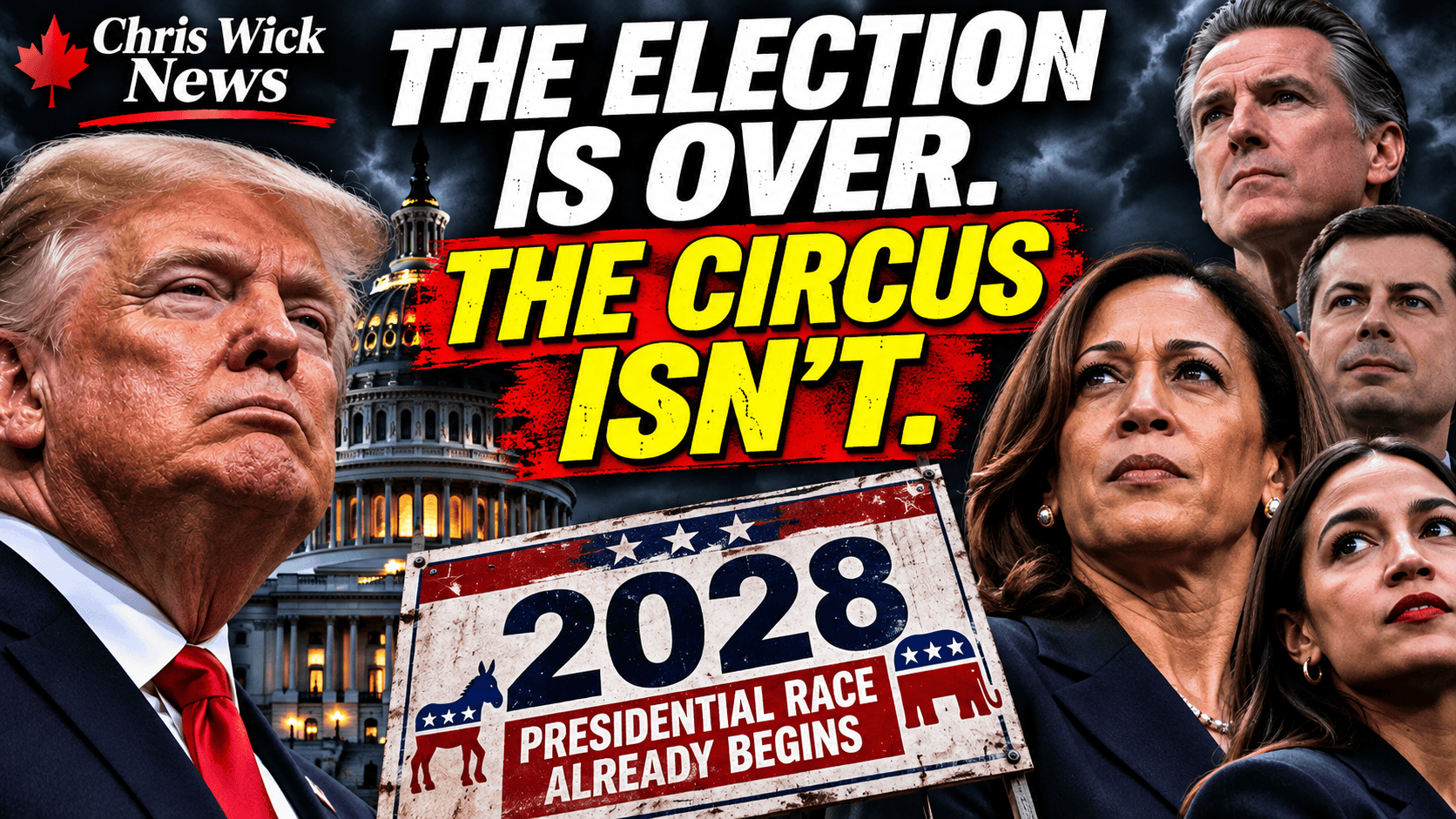
The ballots are barely counted. Democrats have captured Congress. Americans are demanding answers about the cost of living. And Washington is already looking toward the next presidential election.
Seriously?
The United States has just emerged from a consequential midterm election that handed Democrats control of both the House and Senate, changing the balance of power during Donald Trump’s final two years in office.
But instead of allowing the political dust to settle, attention is already shifting toward 2028.
Potential candidates. Campaign donors. Party factions. Leadership battles.
The next presidential contest is already taking shape.
And Americans could reasonably ask one uncomfortable question.
When does anybody actually get around to governing?
The 2028 Presidential Race Is Already Taking Shape
According to Reuters, Democratic strategists believe as many as 30 potential candidates could consider seeking the party’s 2028 presidential nomination.
______________________________________________
🔴 Help keep this independent voice alive and uncensored.
Support independent journalism and help keep Chris Wick News going.
👉 Support Chris Wick on GoFundMe
Among the names being discussed are former Vice President Kamala Harris, California Governor Gavin Newsom, Kentucky Governor Andy Beshear, former Transportation Secretary Pete Buttigieg, and Representative Alexandria Ocasio-Cortez.
Republicans face their own succession questions.
Vice President JD Vance and Secretary of State Marco Rubio are among the figures attracting attention as potential successors to Trump, who cannot be elected to a third presidential term.
No official nomination contests have begun.
But the positioning, fundraising, and political calculations are already underway.
Welcome to America’s seemingly permanent campaign season.
Voters Have More Immediate Concerns
The 2026 midterms delivered major Democratic victories amid public frustration over economic conditions, rising living costs, and the Trump administration’s policies.
Those concerns will not disappear simply because Congress changes hands.
Families still face household expenses.
Businesses still need predictable economic policies.
And lawmakers must confront government funding, federal borrowing, and disagreements over trade and healthcare.
The incoming Democratic majority will have significant oversight powers, including the ability to investigate executive branch decisions.
Democratic leaders argue that stronger congressional oversight is necessary to ensure accountability.
Republicans, meanwhile, retain the presidency and substantial executive authority.
The result could be productive negotiation, intensified confrontation, or some combination of both.
What matters is whether Congress delivers meaningful outcomes.
Political Accountability or Another Endless Campaign?
There is nothing inherently wrong with preparing for the next election.
Presidential campaigns require organization, fundraising, policy development, and public debate. Voters also benefit from having time to examine potential candidates.
But there is a legitimate distinction between preparing for an election and allowing electoral calculations to dominate government decisions.
When every congressional hearing becomes campaign material, every policy dispute becomes a fundraising opportunity, and every political disagreement becomes a preview of the next presidential contest, the incentives become complicated.
Politicians may gain publicity from confrontation even when compromise would produce better practical results.
And voters are left trying to distinguish genuine accountability from political performance.
America Needs Results, Not Just Another Campaign
The next presidential election is two years away.
The economic challenges confronting American households are happening now.
Democrats have an opportunity to demonstrate what their new congressional majorities can accomplish.
Republicans have an opportunity to explain how the administration intends to work with a divided government.
Both parties will be judged on their actions, not simply their campaign messaging.
America does not have to choose between preparing for its political future and addressing its problems today.
But if Washington spends the next two years treating every decision as preparation for 2028, Americans will have good reason to question whose priorities are coming first.
The election is over. The responsibility to govern isn’t.
Sources
- Reuters — Democrats Flex Congressional Majorities as Trump Accepts Electoral Losses
- Associated Press — Takeaways: Voters Punish Trump and GOP Suffers Historic Losses
- Council on Foreign Relations — The 2028 Presidential Race Is About to Begin