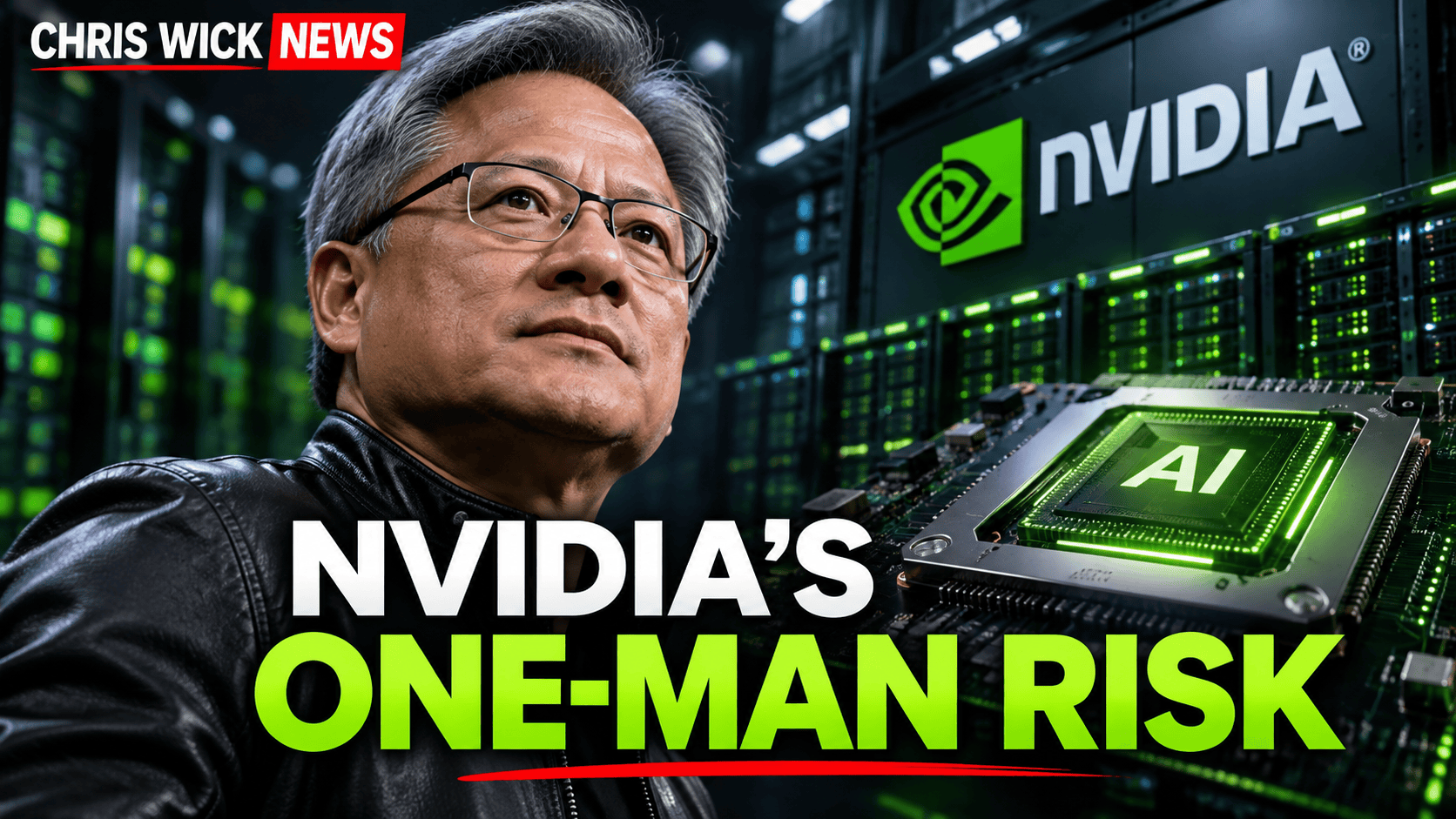
The artificial intelligence revolution was supposed to be about machines becoming smarter, faster and increasingly independent of human limitations.
Yet much of this trillion-dollar technological race appears remarkably dependent on one man.
Jensen Huang, the 63-year-old CEO of Nvidia, has become one of the most powerful figures in global technology. His company’s chips help train artificial intelligence models, operate massive data centres and power services used by millions.
But Nvidia’s extraordinary success has created an uncomfortable vulnerability: the industry may have become dangerously dependent on Huang himself.
And now that dependence is being tested.
When Billionaires Have to Beg for Chips
Consider how dramatically the balance of power has shifted.
Oracle co-founder Larry Ellison once described a dinner involving Elon Musk and Huang during which the two billionaires were effectively pleading for access to Nvidia’s graphics processing units.
Think about that.
Some of the wealthiest and most influential businessmen on Earth were competing for the attention of a chip executive.
______________________________________________
🔴 Help keep this independent voice alive and uncensored.
Support independent journalism and help keep Chris Wick News going.
👉 Support Chris Wick on GoFundMe
That’s how much power Nvidia commands.
Its technology has become essential infrastructure for companies spending enormous sums to develop artificial intelligence.
But Huang’s influence goes further than selling processors.
Nvidia has increasingly invested in the broader AI ecosystem, supporting companies and infrastructure that also depend on its technology.
The company isn’t merely supplying the AI revolution. It’s helping finance and shape the industry growing around it.
That concentration of influence deserves considerably more scrutiny.
The Investigation Changes Everything
The situation became more complicated after Nvidia launched an independent investigation into reports that Huang may have been targeted by a foreign intelligence operation.
The controversy followed allegations involving a Chinese businesswoman with whom Huang acknowledged having an intimate relationship.
The allegations concerning intelligence activity remain disputed. China has rejected the spying accusations, and there has been no established finding that Huang knowingly compromised company information or national security.
Nvidia has expressed support for its chief executive.
Nevertheless, the investigation has exposed a significant problem that existed long before the controversy.
Nvidia has not publicly disclosed a succession plan, and analysts see no obvious replacement for Huang.
For a company so central to global AI infrastructure, that’s a hell of a vulnerability.
Too Much Power, Too Little Transparency?
Huang has led Nvidia since co-founding it in 1993.
According to Reuters, more than 60 executives report directly to him, an unusually large number for a chief executive.
His family also holds positions within the company.
None of that automatically establishes wrongdoing or poor management. Nvidia’s remarkable commercial success speaks to the effectiveness of its leadership.
But success doesn’t eliminate legitimate questions about corporate governance.
It makes those questions more important.
When one individual dominates strategy, relationships and public confidence, investors have every reason to ask whether the organization could function just as effectively without him.
Huang owns approximately 3.6% of Nvidia and does not possess special voting rights that would guarantee control.
Yet his personal influence extends far beyond that ownership stake.
The Bigger Question Nobody Should Ignore
Artificial intelligence is increasingly being presented as the foundation of the next global economy.
Governments are investing in it. Corporations are reorganizing around it. Entire industries are betting their futures on it.
And much of that ambition relies on technology supplied by one company whose leadership appears extraordinarily concentrated around one individual.
That doesn’t mean Nvidia will collapse without Huang. Its engineers, products and infrastructure are far bigger than any single executive.
But it does raise a serious question about how much power the technology industry has allowed to accumulate in so few hands.
The AI revolution promises to reduce humanity’s dependence on individual human decisions.
Perhaps its biggest irony is that so much of its future still depends on one man.
And right now, nobody seems entirely certain what happens if that man is no longer in charge.
Sources
- Reuters — No Ordinary CEO: Why the AI Race Cannot Do Without Nvidia’s Jensen Huang
- Associated Press — Internal Probe Into CEO Jensen Huang and Foreign Intelligence Weighs on Nvidia Shares