







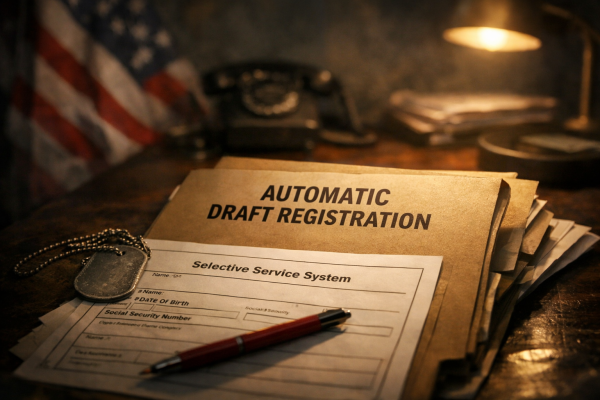
US Moves Toward Automatic Military Draft Registration
The US is moving toward automated military draft registration, raising questions about privacy, consent, and government reach. A subtle but profound change is underway.


The US is moving toward automated military draft registration, raising questions about privacy, consent, and government reach. A subtle but profound change is underway.

Kentucky’s new Mobile ID app promises convenience at airport checkpoints, but its arrival alongside age-verification laws raises deeper questions about digital identity, privacy, and how far such systems may eventually expand.

This reflective investigative commentary explores why accountability in government and society matters more than ever, and how questioning authority has quietly shifted from a healthy civic duty into something viewed with suspicion. Through calm, thoughtful analysis, it examines what happens when fairness fades, leadership avoids scrutiny, and ordinary people are told to stop asking reasonable questions.

As emotional surveillance technology moves from labs into everyday life, devices are learning to read stress, fear, and mood from heart rate, expressions, and behavior. This investigative breakdown explores what happens when feelings become data — how governments, corporations, and institutions may use emotional analytics, and why the quiet erosion of privacy matters long before it becomes unavoidable.

A WHO bulletin funded by the Gates Foundation outlines plans for a globally interoperable digital ID system linking vaccination status, socioeconomic data, and access to services. This investigative-style analysis explores the quiet expansion of digital identity infrastructure, AI-driven monitoring, and the growing debate around autonomy, access, and global digital ID system control.