France is facing a dangerous confrontation between an increasingly angry population and a government struggling to maintain control.
What began as demonstrations over deteriorating public services, rising living costs and frustration with government policies has spiralled into some of the country’s most serious civil unrest in years.
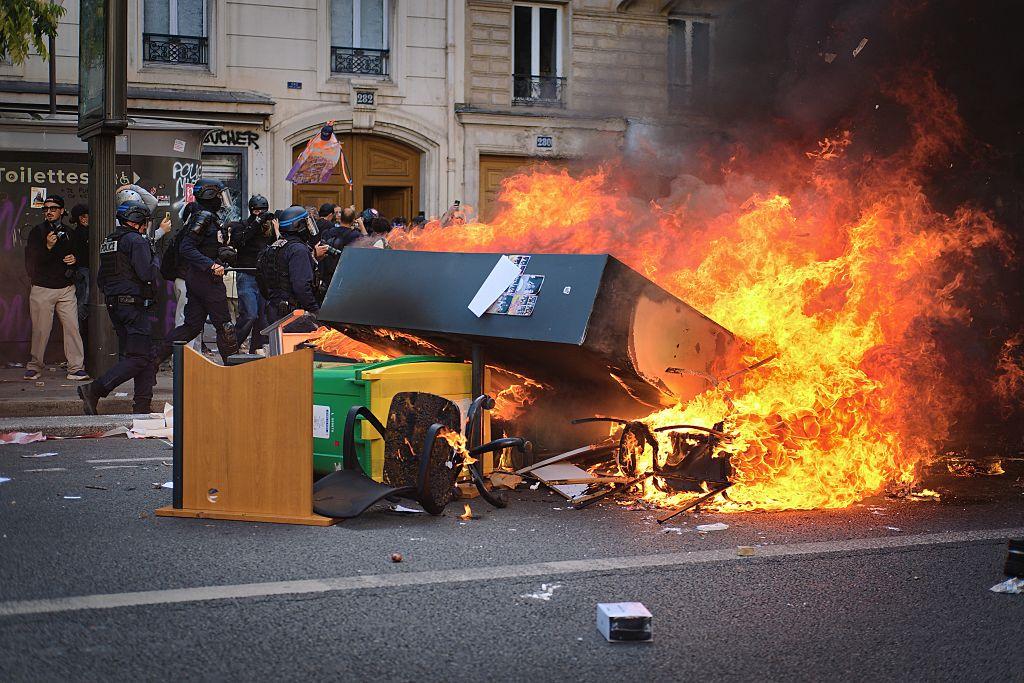
Burning buildings. Looted businesses. Injured teenagers. Thousands of arrests. Riot police battling demonstrators in the streets.
And behind the chaos is a question French authorities cannot afford to ignore: What happens when a growing portion of the population no longer believes its government is listening?
A November 14 Reuters investigation reveals a disturbing picture of a country where public anger, political division, police tactics and street violence have combined into an increasingly volatile situation.
This is no longer simply a question of public order. It is becoming a question of political legitimacy.
WHEN PUBLIC ANGER EXPLODES
The demonstrations began in September, initially involving relatively small protests over conditions in state schools.
But the grievances quickly expanded.
High living costs, strained public services, deteriorating confidence in government and frustration with the political establishment brought increasingly diverse groups into the streets.
The October 17 demonstrations marked a major turning point.
More than half a million people reportedly demonstrated nationwide, including approximately 110,000 in Paris, according to figures cited by French authorities.
What followed was devastating.
Thousands of businesses were reportedly ransacked over a 24-hour period. Public buildings were attacked, vehicles burned and entire neighbourhoods experienced violence that overwhelmed police resources.
In Paris, Marseille and Lyon, authorities struggled to contain the disorder.
This was not simply an isolated confrontation between protesters and police. It was a national crisis unfolding across multiple cities.
THE GOVERNMENT’S RESPONSE IS CREATING ANOTHER CRISIS
French officials have blamed far-left radicals, organized troublemakers and opportunistic criminals for exploiting largely peaceful demonstrations.
There is undoubtedly evidence of serious criminal violence.
Businesses were destroyed. Police officers were attacked. Public buildings were set on fire. Ordinary citizens and business owners were left dealing with the consequences.
But that is only part of the story.
Reuters reports that police tactics have also come under intense scrutiny, including allegations of beatings, excessive force and serious injuries suffered by young demonstrators.
Human rights experts have raised concerns about the treatment of minors during school blockades.
The French Interior Ministry reportedly confirmed that 161 investigations into alleged police violence against protesters had been launched since September.
That number deserves attention.
A government has a responsibility to protect public safety. Police officers must be able to defend themselves and innocent citizens against violent offenders.
But law enforcement also has a responsibility to operate within the law.
When images of injured teenagers and aggressive police confrontations circulate, public anger can spread well beyond the original protest movement.
And that is precisely the danger facing France.
THOUSANDS ARRESTED, BUT HAS THE GOVERNMENT UNDERSTOOD THE ANGER?
French Justice Minister Gérald Darmanin said more than 4,900 suspects had been taken into custody since October 17.
More than 2,290 were referred for prosecution, while 404 had received prison sentences at the time of his November 3 statement.
The government has also reinforced security operations, deployed tens of thousands of police officers and paramilitary gendarmes, imposed curfews and restricted demonstrations.
But arresting people does not automatically resolve the conditions that brought them into the streets.
France now faces a difficult dilemma.
Allow violent demonstrations to continue unchecked and the government risks losing control of public spaces.
Respond with increasingly aggressive policing and authorities risk creating another generation of people who believe the system is working against them.
Neither outcome offers a sustainable solution.
MACRON’S POLITICAL PROBLEM IS GETTING BIGGER
President Emmanuel Macron is approaching the final months of his presidency before the April 2027 election.
He cannot stand for another term.
His government is already dealing with strained public finances and a weakened parliamentary position that limits its ability to pass major legislation.
That makes the protests particularly dangerous politically.
The government has promised improvements in education and brought forward a planned minimum-wage increase.
But student leaders and major trade unions say the measures do not go far enough.
The problem is that public confidence cannot simply be restored through another government announcement or carefully staged political appearance.
People want results.
They want functioning public services, affordable living conditions and a government that responds to their concerns before frustration turns into confrontation.
When those expectations go unanswered, the political consequences can be enormous.
THE DANGEROUS CYCLE: VIOLENCE, REPRESSION AND MORE VIOLENCE
Perhaps the most troubling aspect of the French crisis is the possibility that both sides are becoming trapped in an escalating cycle.
Violent demonstrators provoke police.
Police respond with force.
Images of police confrontations circulate online.
More people become angry and join the demonstrations.
Additional clashes follow.
Sociologist Fabien Jobard, quoted by Reuters, described how violence by demonstrators and the response from law enforcement can reinforce one another.
This is an extremely dangerous dynamic.
It creates opportunities for extremists, undermines peaceful protesters and makes it increasingly difficult for authorities to distinguish between legitimate demonstrations and criminal activity.
And when public trust deteriorates far enough, even reasonable government measures can be viewed with suspicion.
That is a serious problem for any democracy.
FRANCE SHOULD BE A WARNING TO OTHER DEMOCRACIES
There is a lesson here that extends well beyond France.
Governments across the Western world are confronting economic pressure, public dissatisfaction, declining confidence in political institutions and increasingly divided populations.
The circumstances differ from country to country, but the underlying danger is familiar.
Political leaders often recognize the seriousness of public anger only after it becomes impossible to ignore.
By then, the cost of restoring confidence can be considerably greater.
Governments cannot demand public respect while ignoring legitimate grievances.
Equally, protesters cannot claim to defend democracy while destroying businesses, attacking police officers and setting public buildings on fire.
There must be accountability on both sides.
The right to demonstrate peacefully is fundamental. So is the right of ordinary citizens to live and work without fear of violence.
Neither should be sacrificed.
THE BOTTOM LINE: A GOVERNMENT CAN CONTROL A STREET WITHOUT WINNING BACK ITS PEOPLE
France’s immediate challenge is restoring public order.
Its much larger challenge is restoring public confidence.
Deploying 70,000 police officers may help contain demonstrations. Arrests may remove violent offenders from the streets. Restrictions may temporarily prevent further confrontations.
But none of those measures addresses the underlying reasons hundreds of thousands of people have taken to the streets.
A government can suppress a demonstration.
It cannot permanently suppress public frustration through force.
And if French political leaders fail to understand that distinction, the unrest unfolding today could become an even greater political crisis tomorrow.
The question is no longer simply whether France can restore order. It is whether its political leadership can restore the public’s trust before the next explosion of anger.
Chris Wick | Chris Wick News
Independent news. Uncomfortable questions. No political team gets a free pass.
SOURCES
- Reuters — Riots in France: How anti-government protests spiraled out of control — November 14, 2026
https://www.reuters.com/world/europe/riots-france-how-anti-government-protests-spiralled-out-control-2026-11-14/