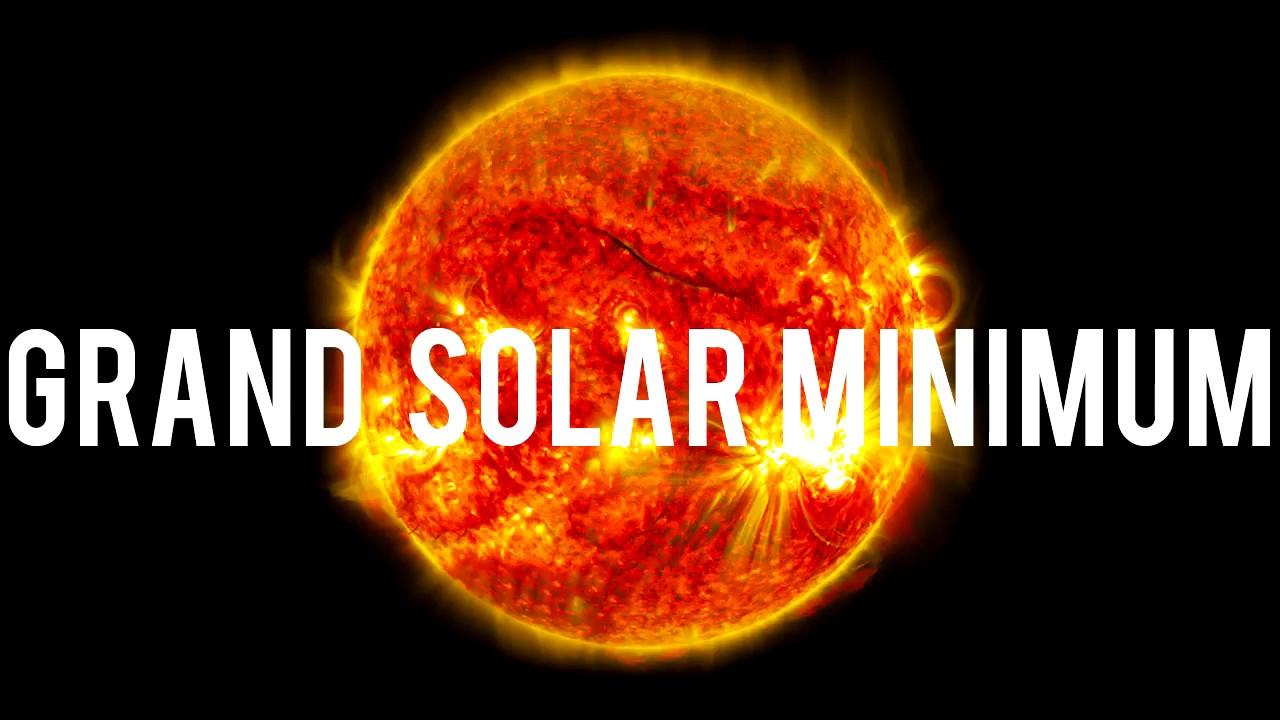
In the realm of climate science, a Ukrainian solar researcher, Valentina Zharkova, stands out as a formidable figure with a strong academic foundation. For years, she has been sounding the alarm about a profound phenomenon that could usher in significant climate and weather shifts, including global cooling. What sets her research apart is her assertion that the sun’s activity, not carbon dioxide, is the primary driver of these changes. In this article, we delve into Zharkova’s groundbreaking insights, exploring the implications of her findings and their potential impact on our planet’s future.
Unraveling the Solar Mystery
In a thought-provoking 2019 interview with acclaimed Canadian journalist Stuart McNish on his program “Conversations That Matter,” Valentina Zharkova shared her research, which has earned her recognition worldwide. She revealed that since 2015, the sun’s activity has exhibited a distinctive decline, reminiscent of the Grand Solar Minimum, last witnessed during the Maunder Minimum—an event that transpired four centuries ago.
Solar Activity on the Decline
Multiple reputable research organizations, including the National Oceanic and Atmospheric Administration (NOAA) and the National Aeronautics and Space Administration (NASA), have quietly documented this downward trend in solar activity. According to Zharkova, this significant reduction in solar activity will inevitably trigger dramatic climate and weather transformations, potentially leading to a global cooling phenomenon akin to a mini ice age.
The Chilling Forecast
Zharkova, an astrophysics doctorate holder, forecasts that the period spanning from the latter part of the ‘Solar Cycle 25’ until the early 2050s will witness Earth grappling with exceptional cold spells, extreme weather events, seismic activities, and volcanic eruptions. She singles out the year 2030 as the onset of this chilling transformation, cautioning that the 2030s could bring about severe food shortages due to the frigid conditions.
Scientific Validation
Back in 1998, Zharkova made waves in the scientific community by unveiling her discovery that solar flares were triggered by solar quakes, following extensive research. Solar flares represent intense localized eruptions of electromagnetic radiation in the sun’s atmosphere. Zharkova’s portfolio boasts over 200 articles, including three published in Nature-affiliated journals. One of these articles accurately predicted the modern Grand Solar Minimum, a phenomenon she believes will grip the Earth from 2020 to 2053.
______________________________________________
🔴 Help keep this independent voice alive and uncensored -> Buy us a Coffee <-
The Power of Mathematics
Zharkova’s research leveraged a sophisticated mathematical program that has demonstrated a remarkable 97 percent accuracy rate over the past three decades in tracking the movement of sunspots. These sunspots, cooler regions on the sun’s surface, exhibit periodic motion and appear darker when photographed. Despite their relative coolness, these sunspots maintain temperatures hovering around a scorching 4,200 degrees Celsius.
A Curious Coincidence
Interestingly, 2020, the year Zharkova’s predictions began to gain traction, also witnessed the emergence of the Wuhan coronavirus (COVID-19) pandemic, leading to extensive lockdowns and the introduction of the “New Normal” in various countries. The world underwent significant changes, with the promise that things would never be the same again. It is worth noting that Zharkova authored a monograph on particle kinetics, served as an editor for a book on automated recognition and classification of digital images, and penned the Reuven Ramaty High Energy Solar Spectroscopic Imager (RHESSI) book on high-energy particles. These works have raised concerns among independent news outlets about Agenda 2030 and the claims of “human-induced global warming,” anticipated to impact us in the early 2030s.
The Unanswered Questions
As Zharkova continues to sound the alarm, many wonder why governments and global organizations are not issuing warnings about the impending solar-induced changes. The lack of transparency regarding these impending shifts and the emphasis on warming as the primary threat raises unsettling questions about our understanding of the future.
Surge in Sunspot Activity
In June, scientists observed an unprecedented surge in sunspots on the sun’s surface—a development that aligns with Zharkova’s warnings. These sunspots, regions characterized by intense magnetic fields, temporarily disrupt the convection process and lead to localized temperature drops, rendering them darker than their surroundings. Sunspots are often associated with solar flares and coronal mass ejections (CMEs), which propel plasma particles from the sun’s corona into space.
AR3354: The Giant Sunspot
One sunspot, in particular, named AR3354, garnered attention when it emerged on June 27. It swiftly expanded to a size approximately ten times that of Earth within a mere two days. In July, it unleashed an X1 class solar flare, resulting in a profound shortwave radio blackout over the Pacific Ocean and western parts of the United States. Class X flares are the most intense and can have significant impacts on life on Earth, disrupting electrical grids and potentially damaging spacecraft.
Conclusion
As we stand on the brink of potentially monumental changes in our climate and weather patterns, Valentina Zharkova’s research forces us to reevaluate our understanding of the driving forces behind these transformations. With solar activity declining and the specter of a Grand Solar Minimum looming, the future holds uncertain challenges. It is imperative that we heed the warnings, ask the tough questions, and prepare ourselves for a world that may be markedly different from the one we know today.
About the Author