Donald Trump promised Americans prosperity. His tariffs were supposed to protect American jobs, strengthen domestic manufacturing, and put the United States first.
Now a new Reuters/Ipsos poll has delivered an uncomfortable number for the White House.
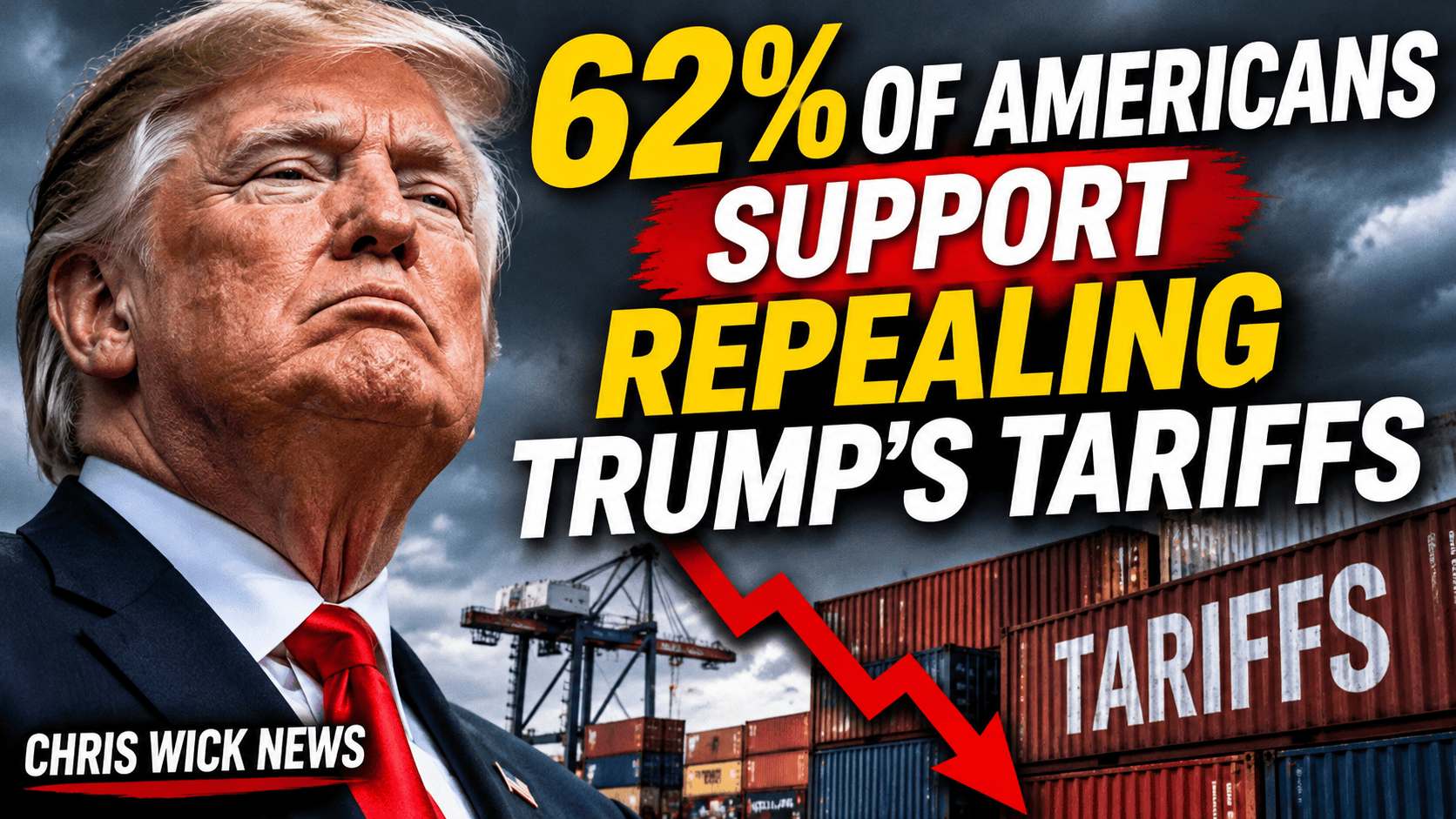
Sixty-two percent of Americans support an effort to repeal Trump’s import tariffs.
That’s a significant majority questioning one of the president’s signature economic policies. And it comes as Americans continue struggling with rising prices.
The question is no longer simply whether tariffs can protect American industries. It’s whether the economic benefits justify the costs being passed along to businesses and households.
The Price of Putting America First
Trump has repeatedly defended tariffs as a way to protect American manufacturers from foreign competition.
There’s an economic argument behind that position. Import duties can make competing foreign products more expensive, potentially encouraging businesses to buy domestically produced goods.
But there’s another side to the equation.
Tariffs are taxes collected from American importers. Those businesses can absorb the additional costs, negotiate lower prices with foreign suppliers, or pass some of the expense along to customers.
______________________________________________
🔴 Help keep this independent voice alive and uncensored.
Support independent journalism and help keep Chris Wick News going.
👉 Support Chris Wick on GoFundMe
And when businesses raise prices, ordinary Americans can end up paying more.
That’s the uncomfortable reality behind the political slogans.
The administration argues that protecting American industry is worth the trade-offs. Critics argue that broad tariffs increase consumer costs and punish businesses dependent on imported materials.
Both arguments deserve examination. But Americans also deserve an explanation of who is actually paying the bill.
The Poll Numbers Are Difficult to Ignore
The Reuters/Ipsos survey, completed November 9, questioned 1,705 U.S. adults.
It found that 62% supported efforts to repeal the administration’s import tariffs.
The same survey found that 71% wanted Congress to pass legislation ending the war with Iran.
And approximately nine in ten respondents wanted the cost of living to be a priority for the incoming Congress during its first 100 days.
These findings don’t establish that tariffs alone caused America’s affordability problems. Energy costs, inflation, supply chains, and other economic pressures also matter.
But they demonstrate widespread public concern about the direction of economic policy.
Washington’s Promises Meet the Grocery Bill
Trump’s defenders can point to the potential long-term benefits of domestic production, industrial investment, and reduced dependence on foreign suppliers.
Those are legitimate policy objectives.
But protecting American industry and protecting American purchasing power aren’t automatically the same thing.
A tariff that helps one domestic manufacturer may increase costs for another business that depends on imported components.
And the family buying groceries, replacing a vehicle, or paying for household necessities doesn’t experience economic policy as a campaign slogan.
It experiences the price.
That’s where political promises collide with everyday reality.
The Real Test Is Still Ahead
Democrats are preparing to take control of Congress in January, promising renewed attention to affordability and Trump’s trade policies.
Repealing tariffs, however, involves legal and political complications. Congress cannot simply erase every trade restriction with a press conference.
The administration maintains that tariffs are necessary to protect American industry.
Critics maintain that consumers and businesses are carrying too much of the burden.
The public deserves something more useful than another round of partisan shouting: clear evidence about which industries benefit, which businesses pay more, and whether household costs are rising as a result.
Sixty-two percent supporting repeal is not proof that every tariff has failed. But it is a warning that the administration’s economic promises are facing serious public skepticism.
And that deserves more than another damn slogan.
Sources
- Reuters, November 10, 2026: https://www.reuters.com/world/us/most-americans-want-new-democratic-congress-end-trumps-iran-war-reutersipsos-2026-11-10/
- Ipsos, Reuters/Ipsos Post-Election Survey, November 9, 2026: https://www.ipsos.com/en-us/latest-us-opinion-polls
- Associated Press, reporting on tariffs and public opposition: https://apnews.com/article/ea6fe1ef1a56d952659d22b97bbc8130