WASHINGTON — November 6, 2026
THE AI INDUSTRY HAS BEEN RUNNING FULL SPEED AHEAD. NOW WASHINGTON IS GETTING READY TO HIT THE BRAKES.
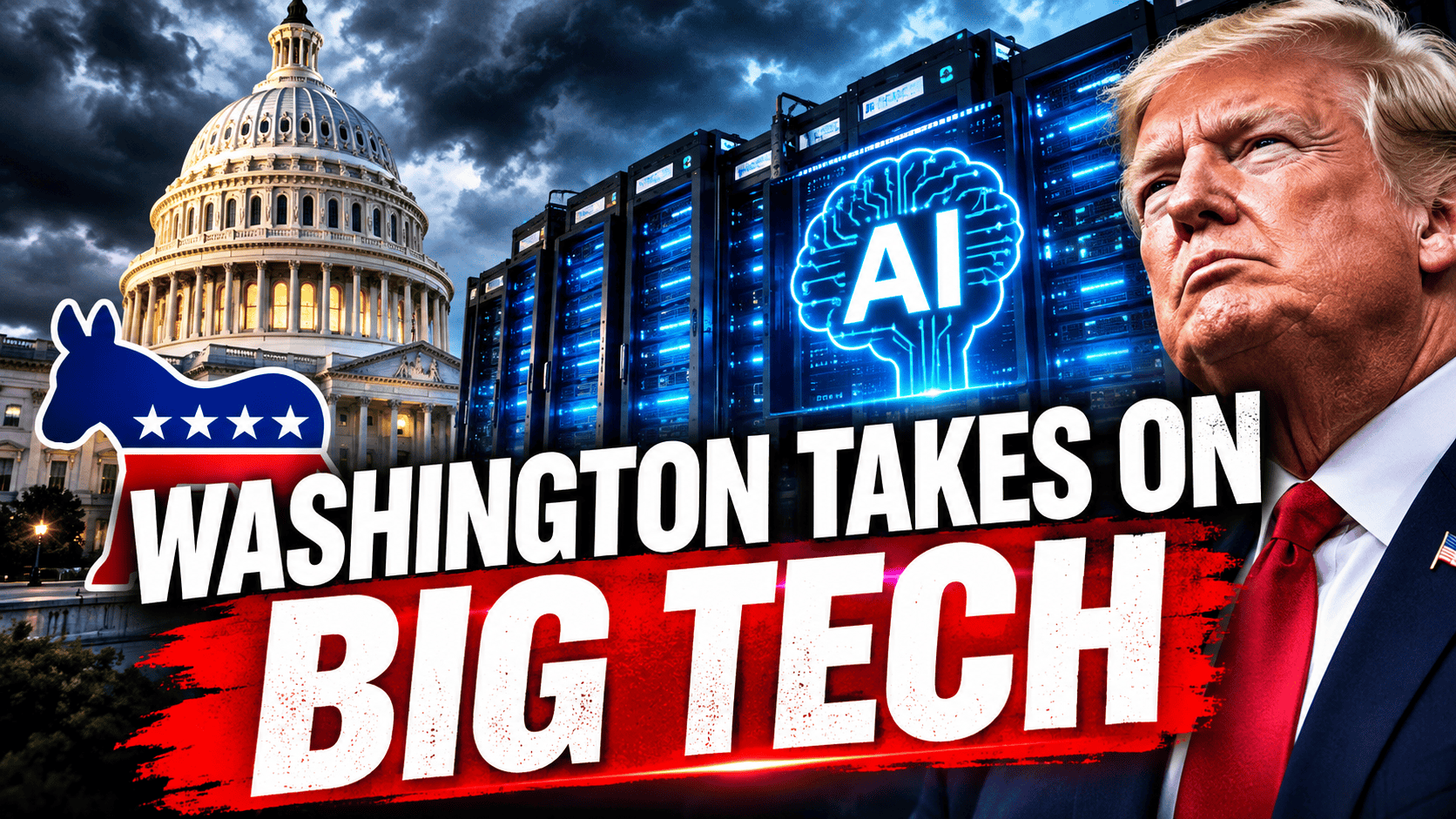
Democrats are preparing a sweeping legislative offensive against artificial intelligence companies when they assume control of Congress in January 2027, potentially setting up a major confrontation with President Donald Trump and some of America’s most powerful technology corporations.
According to Reuters, Democratic lawmakers are developing multiple proposals targeting AI safety, corporate accountability and the enormous electricity demands of rapidly expanding data centers.
And this fight could reach considerably further than Silicon Valley.
The AI Boom Has a Price — And Americans May Be Paying It
For years, technology companies have promoted artificial intelligence as the next great economic revolution.
Billions are being poured into computing infrastructure, enormous data centers and increasingly sophisticated AI systems.
But there’s an uncomfortable question behind all that technological excitement.
Who pays when the infrastructure supporting these corporate ambitions puts additional pressure on electricity prices?
______________________________________________
🔴 Help keep this independent voice alive and uncensored.
Support independent journalism and help keep Chris Wick News going.
👉 Support Chris Wick on GoFundMe
Senator Chuck Schumer, expected to become Senate majority leader, has identified protecting consumers from higher energy costs associated with data centers as a priority.
That concern deserves attention.
Data centers require substantial electricity, and their expansion can create expensive demands on regional power infrastructure.
Whether those costs ultimately land on technology companies, utilities or ordinary households depends on how projects are financed and electricity rates are structured.
Americans already struggling with household expenses have every reason to demand transparency.
Big Tech Could Face Independent Testing and Legal Accountability
Representative Lori Trahan of Massachusetts is preparing legislation that would require independent experts to evaluate advanced AI systems against safety standards.
Her office is also pursuing measures clarifying when developers can be held legally responsible for harmful actions involving their technology.
Consider the implications.
If an AI system causes serious financial damage, compromises sensitive information or produces dangerous outcomes, who should bear responsibility?
The developer? The company deploying it? The individual using it?
These questions become increasingly important as AI systems gain greater autonomy.
Democrats also intend to intensify scrutiny of major companies, including OpenAI, Anthropic, Meta, Google and SpaceX.
Texas Representative Greg Casar has called for AI executives to testify under oath.
That could transform the debate from corporate promises about safety into congressional examinations of what companies actually know about their systems.
Trump Still Holds the Veto Pen
There’s one enormous obstacle standing between Democratic proposals and federal law.
Donald Trump.
His administration has generally opposed mandatory AI restrictions, emphasizing technological development and American competitiveness.
Even with Democratic control of Congress, legislation could face presidential vetoes and Senate procedural obstacles.
Supporters of tighter regulation argue that public safety and accountability cannot be left entirely to corporate discretion.
Opponents warn that excessive restrictions could slow innovation, raise compliance costs and weaken America’s position against international competitors.
Both concerns deserve serious examination.
But congressional investigations and public hearings can proceed even when major legislation remains politically blocked.
The Bigger Question Nobody Should Ignore
This debate isn’t simply about Democrats versus Republicans.
It’s about whether a technology capable of reshaping employment, information, energy consumption and economic power should develop primarily under rules written by the corporations profiting from it.
Regulation can protect consumers. Poorly designed regulation can also entrench the largest companies by making compliance too expensive for smaller competitors.
The public deserves something better than corporate self-policing on one side and political grandstanding on the other.
Artificial intelligence is advancing at extraordinary speed.
Accountability needs to keep pace.
And here’s the question Washington should answer before another billion dollars gets poured into the AI race:
Are lawmakers preparing to protect ordinary Americans from the risks of artificial intelligence — or simply positioning themselves to control one of the most powerful industries on Earth?
Sources
- Reuters — November 6, 2026: Democrats planning flood of AI bills when they take control of Congress
- Foley & Lardner — November 5, 2026: Blue Wave, New AI Rules? What Democratic Control of Congress Means for AI Regulation