
In a baffling turn of events, Robert Card, the man accused of a tragic incident that claimed the lives of 18 individuals in Lewiston, Maine, appears to have embarked on a perplexing journey. Recent revelations by Robert’s family shed light on the enigmatic sequence of events that began with his fitting for high-powered hearing aids and the onset of what he described as “intrusive voices.” This article delves into the unfolding narrative, exploring the intricate connection between hearing aids, Robert Card’s experiences, and the broader context of auditory technologies.
Understanding Robert’s Descent into Darkness
Robert Card’s family, specifically Katie Card, who is married to Robert’s brother, has provided valuable insights into the events leading up to the tragedy. According to NBC News, Robert Card’s ordeal began with the installation of high-tech hearing aids, after which he started hearing “horrible” voices instructing him. The abrupt onset of these voices sent shockwaves through Robert’s life, leading to a series of distressing consequences.
The Intricacies of Robert’s Experience
As Katie Card recounted, Robert’s descent into this bizarre auditory world was swift and unsettling. He was hearing voices that were entirely foreign to him. The voices seemed to twist his thoughts and torment his mental state, subjecting him to humiliation and torment. The situation rapidly escalated, causing a severe deterioration in his mental health.
Seeking Clarity Amidst the Chaos
While Robert’s case remains surrounded by uncertainty, it is essential to consider the broader context of auditory technologies and their potential impact on an individual’s mental well-being. High-powered hearing aids have undeniably evolved over the years, integrating advanced technologies to provide enhanced sound quality and clarity. However, can these advancements inadvertently open a door to a realm of intrusive thoughts and voices?
A Glimpse into the Past: Voice-to-Skull Technology
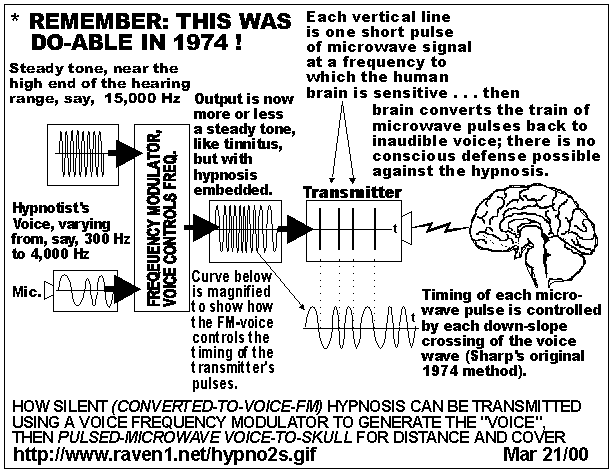
Robert Card’s experience may seem surreal, but the idea of transmitting “intrusive thoughts” directly into people’s minds is not entirely unheard of. In fact, the U.S. government publicly acknowledged such capabilities as far back as 1974. The existence of devices capable of transmitting these voices, known as “Voice-to-Skull” technology, has raised numerous questions and concerns.
A Disappearing Act: The Mysterious Webpage
It is worth noting that the U.S. Army once had a webpage dedicated to “Voice-to-Skull” weapons. However, the strange presence of this webpage has since been removed. Its initial existence was curious, and its sudden disappearance only adds to the intrigue. While the page’s content is no longer accessible, the questions surrounding the existence and application of such technology persist.
Conclusion: Unraveling the Enigma
The case of Robert Card and the alleged “intrusive voices” he began hearing after being fitted for high-powered hearing aids is an intricate puzzle that continues to baffle those seeking answers. It raises profound questions about the intersection of auditory technology, mental health, and government involvement in the realm of mind-affecting devices. As the investigation unfolds, the enigma deepens, leaving us to ponder the boundaries of what is possible in this high-tech age.
In this evolving narrative, one thing remains clear: the need for a comprehensive understanding of the impact of advanced technologies on the human psyche, and the responsibility to ensure the well-being of individuals who may find themselves entangled in a web of inexplicable voices and thoughts.
About the Author