
Chris Wick News | US Politics, Foreign Policy & Government Accountability
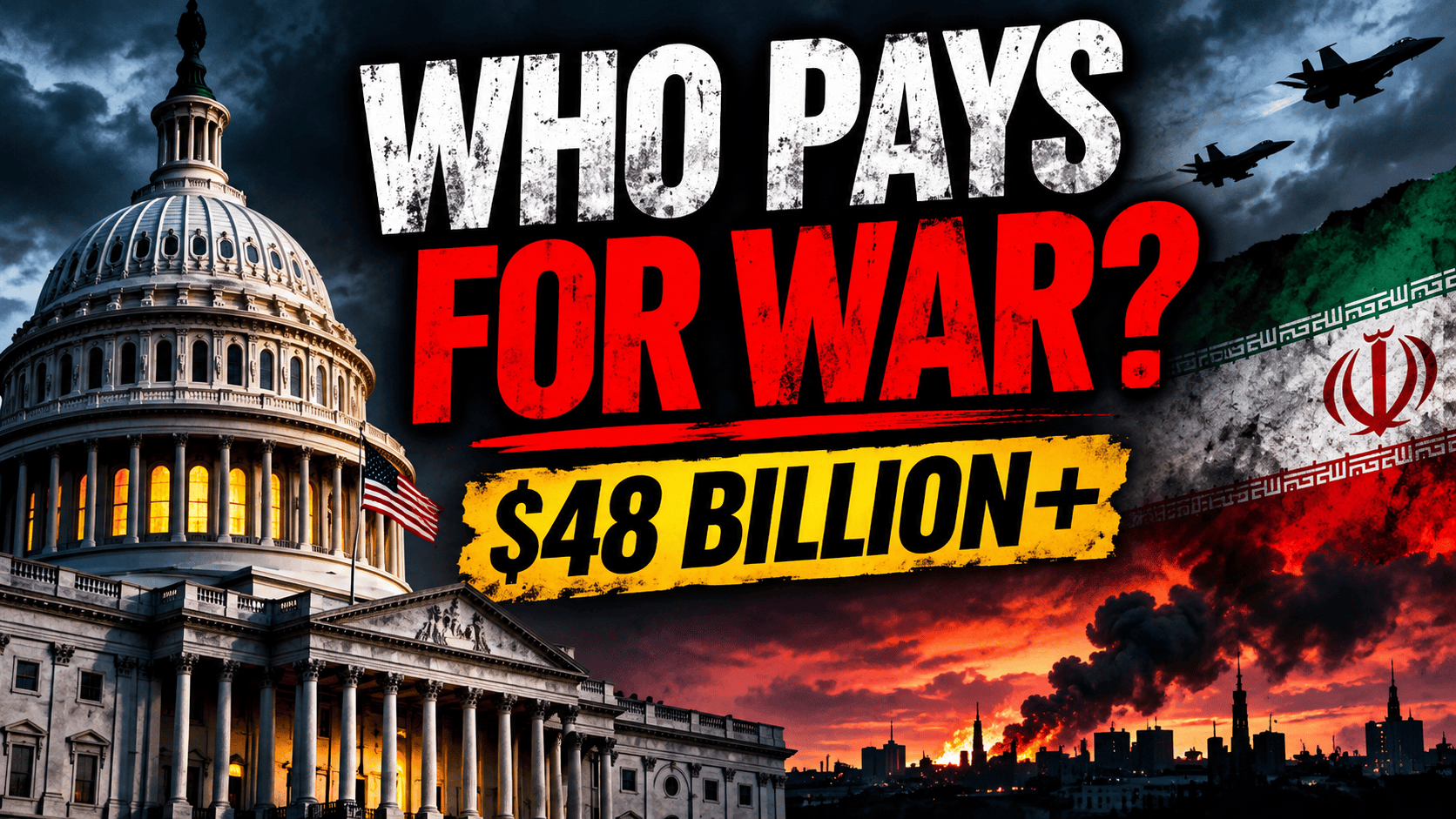
War has a remarkable way of turning billions of taxpayer dollars into numbers nobody wants to explain.
Military operations begin with urgent declarations, promises of national security, and assurances that decisive action is necessary. Then the bills arrive. The casualties mount. The original objectives become harder to recognize.
And ordinary Americans are left asking a question that should have been answered before the first missile was launched.
Who the hell authorized this, what is it supposed to accomplish, and when does it end?
The conflict involving Iran has brought one of America’s oldest constitutional arguments back into focus: who has the authority to commit the nation to war, and who is responsible for ensuring that military operations do not continue indefinitely?
The Constitution Wasn’t Written to Give One Person Unlimited War Powers
The American Constitution divides military authority between Congress and the president.
Article I gives Congress the power to declare war, raise and support armies, and control federal spending. Article II makes the president commander in chief of the armed forces.
That division was deliberate.
The president directs military operations, but Congress possesses crucial powers over authorization, oversight, and funding.
The War Powers Resolution of 1973 was intended to reinforce congressional involvement when American forces enter hostilities. It establishes reporting requirements and generally limits unauthorized military involvement to 60 days, with a possible 30-day withdrawal period, subject to important legal exceptions and disputes.
Yet presidents from both major parties have repeatedly defended broad interpretations of executive military authority.
And Congress has frequently struggled to assert its constitutional role.
The Iran Question Washington Cannot Avoid
Military confrontation involving Iran raises legitimate security concerns, including regional stability, threats to American personnel, nuclear proliferation, and the safety of international shipping.
Those concerns deserve serious examination.
But recognizing a potential threat is not the same thing as granting unlimited authority to wage war.
The public deserves answers about the specific military objective, the legal justification for operations, the anticipated financial burden, and the conditions that would bring American involvement to an end.
Is the objective deterrence? Protection of American forces? Destruction of particular military capabilities? A negotiated settlement?
Those are fundamentally different goals, requiring different strategies and carrying different risks.
Without a clearly defined objective, military success becomes extraordinarily difficult to measure.
And without measurable success, the public has little basis for determining whether continued operations are justified.
The Real Cost Is More Than a Pentagon Budget
Military spending is often discussed in figures so enormous that they lose meaning.
Billions become routine. Emergency appropriations become another congressional vote. Additional deployments become another headline.
But every dollar committed to military operations represents a public resource that cannot simultaneously fund something else.
Americans are entitled to ask how those expenditures compare with domestic priorities such as healthcare, infrastructure, housing, veterans’ services, and debt reduction.
That does not automatically mean military spending is unjustified.
It means the justification should be transparent.
The human costs demand even greater scrutiny.
American service members, civilians in affected countries, displaced families, and future generations can all bear consequences that extend long beyond the initial fighting.
A responsible accounting of war must acknowledge those costs alongside military achievements.
Congress Cannot Escape Responsibility
It is convenient to blame everything on whoever occupies the White House.
But Congress is not a spectator.
Lawmakers possess constitutional tools to demand briefings, investigate military decisions, debate authorizations, and scrutinize expenditures.
They can also legislate funding restrictions, subject to constitutional limits and the political realities of presidential vetoes.
The difficult question is whether elected representatives are willing to use those powers when doing so carries political consequences.
Oversight should not disappear simply because the president belongs to a lawmaker’s preferred political party.
And demanding an explanation of military policy is not equivalent to abandoning American troops or dismissing legitimate national security threats.
It is part of the democratic responsibility Congress was created to exercise.
Final Thoughts: Before Another Billion, Show Americans the Plan
War should never become an open-ended financial commitment supported by vague promises and shifting objectives.
If military operations are necessary, explain why.
If they are succeeding, demonstrate how.
If additional funding is required, provide a credible accounting of what it will purchase and what risks remain.
And if the objective has changed, tell the public.
Americans do not need every classified operational detail. They do need honest answers about the decisions being made in their name.
Because the most dangerous military commitment may be the one that continues long after Washington has stopped explaining what victory actually means.
Latest verified developments — November 23, 2026
This reporting adds an important, concrete dimension to this article:
- $48.3 billion: The Pentagon’s estimated cost of the Iran war through November 13, excluding damage to American bases in the Middle East. AP News
- November 19 Senate vote: Senators rejected a measure requiring Trump to end the war or obtain congressional approval, by 51–48. Reuters
- Congressional authority: The War Powers Resolution generally requires the termination of unauthorized hostilities after 60 days, with a limited withdrawal extension. U.S. Code
Sources
- Associated Press — Iran war costs surpass $48 billion
- Reuters — Senate rejects Iran war powers resolution
- Congressional Budget Office — Estimating the Cost of Combat Operations Against Iran
- United States Code — War Powers Resolution, Section 1544
About the Author