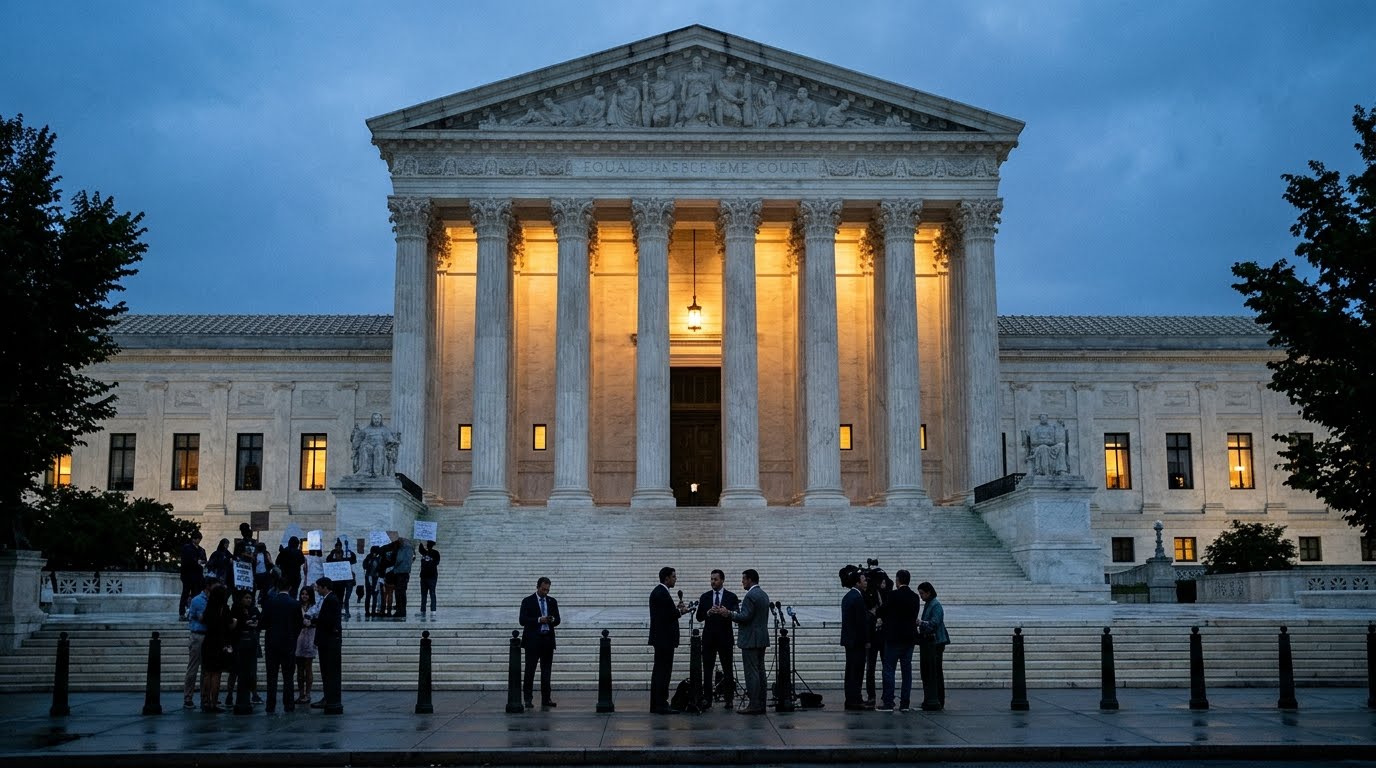
Following a major Supreme Court victory in 2025 that curtailed nationwide injunctions, the Trump administration is back before the high court seeking to strip federal judges of another key legal tool used to halt executive branch policies across the country.
In a new appeal filed by the Department of Justice, the administration is urging the justices to limit how lower courts apply the 1946 Administrative Procedure Act (APA). Specifically, the government argues that when a federal judge finds an agency regulation unlawful, the court should only block the rule for the specific plaintiffs who filed the lawsuit—rather than vacating the policy nationwide.
The Legal Tool in the Crosshairs
Since returning to office in January 2025, President Donald Trump and his allies have frequently criticized federal judges who have slowed down his administration’s policy rollouts.
- Last Year’s Victory: In June 2025, during litigation over Trump’s attempt to restrict birthright citizenship, the Supreme Court clamped down on “universal” or nationwide injunctions. That ruling prevented single district judges from issuing broad orders blocking executive actions against non-parties.
- The Remaining Loophole: However, that 2025 decision left untouched a separate mechanism under the APA—known as “vacatur”—which allows judges to completely set aside federal agency rules they deem unlawful.
- The Current Case: The new Supreme Court appeal stems from a lawsuit brought by Texas medical providers challenging federal regulations tied to the “No Surprises Act,” a first-term Trump-era law meant to curb unexpected medical bills. While a lower court voided portions of the rule nationwide, the Justice Department is asking the Supreme Court to rule that the remedy went too far.
What a Ruling for Trump Would Mean
Legal scholars note that curtailing judges’ power under the APA would significantly expand executive flexibility.
According to Aditya Bamzai, an administrative law expert at the University of Virginia, a win for the administration would allow federal agencies to continue enforcing contested regulations against the general public—potentially for years while appeals play out—even after a federal judge has declared the rules illegal.
Critics of the administration’s push warn that forcing every affected individual, business, or state to file separate lawsuits would weaken judicial checks on executive overreach and keep unlawful policies active indefinitely. Conversely, supporters—including the Biden administration, which made a similar argument in 2023—contend that single lower-court judges should not hold the power to freeze national policy with the stroke of a pen.