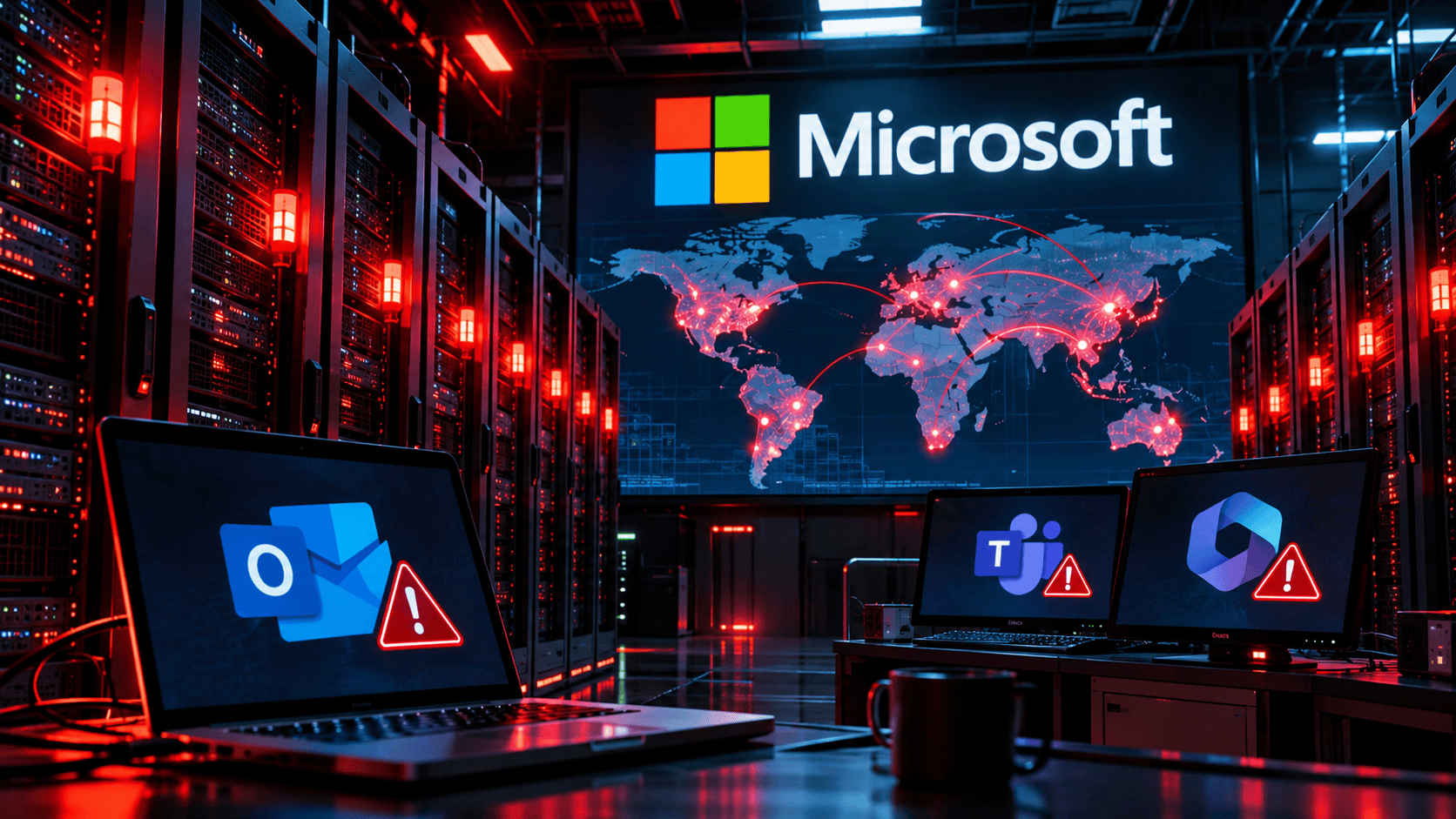
A massive global Microsoft outage has left millions facing disrupted communications, inaccessible emails and malfunctioning workplace systems, exposing a frightening reality: modern civilization has handed an extraordinary amount of control over its daily operations to a handful of technology giants. And when their systems fail, the rest of us pay the price.
The Day the Digital World Stumbled
On November 12, 2026, Microsoft’s digital infrastructure began experiencing widespread failures that quickly rippled across the globe.
Outlook, Microsoft Teams, Microsoft 365 and the company’s artificial intelligence assistant, Copilot, were among the affected services. Businesses struggled to communicate, government agencies experienced disruptions, and ordinary people found themselves locked out of essential digital tools.
Outage reports poured in from 74 countries and territories.
By Friday morning, Microsoft was still fighting to restore normal operations, with initial recovery efforts delivering limited success.
The company reported that some servers had become unexpectedly unavailable, placing additional pressure on the remaining infrastructure. Attempts to restore capacity encountered further complications.
This wasn’t some minor inconvenience involving a forgotten password.
It was a brutal reminder of how much of the modern world depends on systems most people have absolutely no control over.
Microsoft Says It Wasn’t a Cyberattack
Microsoft has indicated that there is no evidence the disruption resulted from malicious activity or a cybersecurity breach.
Instead, investigators have focused on infrastructure problems, excessive server loads and potential configuration issues.
The company reported some improvements after applying technical fixes, although widespread disruption continued during the recovery process.
But here’s the uncomfortable question: should we actually find that reassuring?
If a hostile foreign government or sophisticated hacking group had brought down critical digital infrastructure, the world would immediately demand answers.
Yet when a technology company’s own systems fail and produce widespread disruption, we’re expected to accept an apology, a technical explanation and the promise that engineers are working on it.
The distinction matters technically. For the people unable to access essential services, however, the consequences can feel remarkably similar.
Governments and Businesses Caught in the Fallout
The outage extended far beyond personal email accounts.
Government agencies in Australia experienced communication problems. Some public services issued warnings about disruptions, while businesses across multiple countries struggled with everyday operations.
In Britain, some medical practices advised patients to use telephone services for urgent communications.
Even artificial intelligence companies, including OpenAI and Anthropic, reported disruptions involving connections to Microsoft’s services.
Think about that for a moment.
Governments, businesses, medical offices and some of the world’s most advanced artificial intelligence companies can all experience operational problems because infrastructure controlled by one corporation encounters technical difficulties.
That’s not evidence of some elaborate conspiracy.
It’s evidence of a dangerous concentration of technological dependency.
The Cloud Has Become a Digital Choke Point
For years, corporations and governments have been sold a vision of the future built around cloud computing.
Everything would become faster, smarter, cheaper and more efficient.
But efficiency and resilience are not the same thing.
When organizations depend on the same provider for communications, authentication, document storage and collaboration, a single infrastructure failure can disrupt several supposedly separate operations simultaneously.
The more essential services become interconnected, the greater the potential consequences when something goes wrong.
And while technology executives celebrate digital transformation, ordinary citizens rarely get a meaningful say in how dependent their lives become on these systems.
The Warning Nobody Should Ignore
Microsoft may restore its services. Engineers may identify the underlying problem, implement safeguards and publish a detailed explanation.
But that won’t erase the larger warning.
Modern society needs independent backup systems, alternative communication channels and emergency procedures that don’t rely on the same corporate infrastructure that just failed.
The question isn’t whether another major digital outage will happen.
It’s whether governments and businesses will prepare for it before the next one arrives.
Because when the systems that run our world stop working, the most frightening realization isn’t that technology has failed us. It’s that we’ve built a society that increasingly struggles to function without it.
Sources
- BBC News — Live coverage of the global Microsoft outage
- Reuters — Hours-long Microsoft outage disrupts businesses and governments globally
- Associated Press — Widespread outage hits Microsoft email and other apps
- The Guardian — Global Microsoft 365 outage: What happened and when will it be fixed?
Real Raw News — Independent News, Analysis and Commentary.