








Democrats Invade Trump Country: The Midterm Strategy That Could Force Republicans to Spend Millions
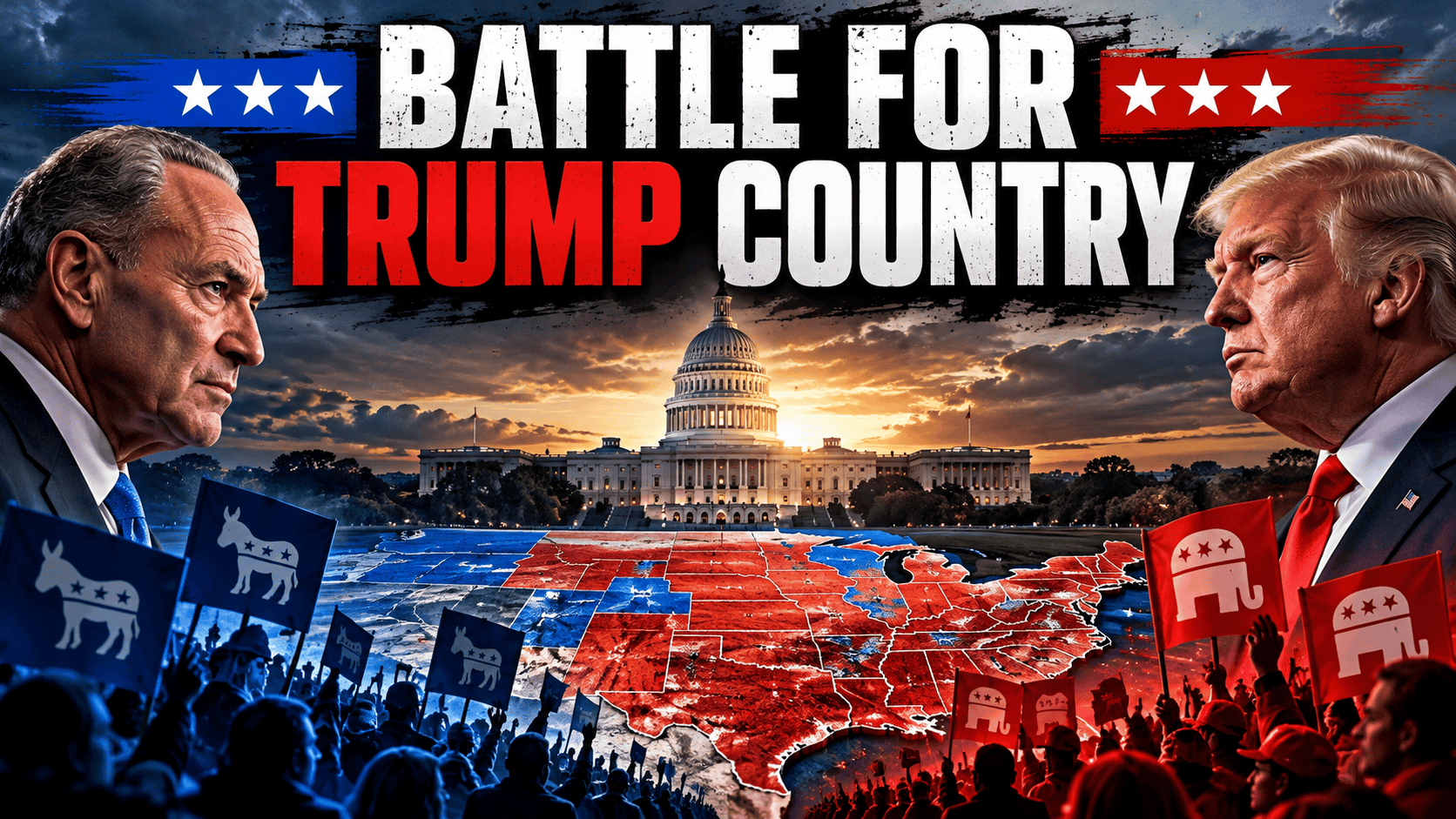
Something unusual is happening in American politics. Democrats are moving their campaign operations into congressional districts where Donald Trump won comfortably in 2024.
And the most interesting part? They don’t necessarily have to win those districts for the strategy to serve a purpose.
With the November 3 midterm elections approaching, Democrats are expanding their electoral battlefield, challenging Republicans in places once considered safely conservative.
The question is whether this represents a genuine shift in American political loyalties or an expensive exercise in forcing the opposition to defend territory it previously took for granted.
Democrats Are Taking the Fight Into Republican Strongholds
According to an October 10 Reuters investigation, the Democratic Congressional Campaign Committee (DCCC) has expanded its target list to 66 Republican-held congressional seats, adding 14 districts this week.
Some of those districts supported Trump by more than 20 percentage points during the 2024 presidential election.
Under ordinary political circumstances, these would hardly be considered promising opportunities for Democrats.
But this election cycle is unfolding against a backdrop of rising living costs, economic frustration, and the ongoing conflict involving Iran.
______________________________________________
🔴 Help keep this independent voice alive and uncensored.
Support independent journalism and help keep Chris Wick News going.
👉 Support Chris Wick on GoFundMe
Democratic strategists believe those conditions could create opportunities even in areas where Republicans have traditionally enjoyed substantial support.
Their approach involves more than simply persuading voters.
It also involves money.
The Real Strategy: Make Republicans Defend More Territory
Political campaigns operate with limited resources, even when enormous sums of money are involved.
Every dollar spent defending a reliably Republican district is a dollar unavailable for another contest.
That is the calculation behind the Democrats’ expanded electoral map.
By putting candidates, campaign staff, advertising, and fundraising operations into traditionally conservative districts, Democrats hope to force Republican organizations to reconsider where they allocate their resources.
The strategy could potentially affect competitive races elsewhere, even if Democrats lose many of their newly targeted contests.
There is already evidence that Republican-aligned organizations are responding.
Reuters reported that Restoration of America PAC spent nearly $750,000 on digital advertising supporting Republican David Flippo in Nevada’s 2nd Congressional District.
Trump carried that district by approximately 14 percentage points in 2024.
The spending demonstrates that at least one Republican-aligned organization is committing substantial resources to a district Democrats recently added to their target list.
However, it does not establish that the Democratic strategy caused the expenditure.
That distinction matters.
Tennessee Becomes an Unexpected Political Battleground
One of the most striking examples involves Tennessee’s newly redrawn 9th Congressional District.
Democratic state legislator Justin Pearson, 31, is challenging Republican state senator Brent Taylor.
The district’s boundaries were changed by Republican lawmakers earlier this year, transforming what had been a heavily Democratic Memphis-area seat into a much larger, predominantly rural district.
Under its new boundaries, the district contains territory that supported Trump by more than 21 points in 2024.
That represents a substantial challenge for any Democratic candidate.
Nevertheless, Pearson’s campaign has attracted national attention and additional financial support following its inclusion on the DCCC target list.
Pearson says his campaign has traveled throughout the district, attempting to reach independent voters and Republicans concerned about affordability.
Taylor, meanwhile, has emphasized the ideological differences between himself and Pearson, portraying his Democratic opponent as too progressive for the district.
The Cook Political Report continues to classify the contest as Solid Republican.
In other words, increased campaign attention should not be confused with evidence that the race has become genuinely competitive.
Republicans Say Democrats Are Stretching Themselves Too Thin
Republican campaign officials reject the idea that expanding the electoral map necessarily puts their party at a disadvantage.
The National Republican Congressional Committee argues that Democrats are spreading their resources across districts where they have limited prospects.
There is a legitimate strategic question here.
If Democrats commit significant funding to districts that remain overwhelmingly Republican, those expenditures could reduce the money available for genuinely competitive contests.
The same financial logic works in both directions.
Election analyst David Wasserman of the Cook Political Report has also expressed skepticism about the expanded Democratic strategy, questioning whether the party will actually commit the money necessary to make these races competitive.
Simply adding a congressional district to a target list does not automatically transform its political fundamentals.
Campaign announcements are one thing.
Actual investment, voter turnout, and election results are another.
Rising Prices Are Becoming a Central Political Issue
The broader economic environment helps explain why Democrats are testing traditionally Republican territory.
An October 9 Reuters/Ipsos survey found that 78% of Americans attributed at least some responsibility for rising living costs to Trump’s policies.
The survey included 4,506 adults and reported margins of error of approximately two to three percentage points, depending on the measure.
Those findings do not mean 78% of Americans intend to vote Democratic.
Nor do they demonstrate that voters in heavily Republican districts are preparing to abandon their party.
But they do illustrate the extent to which affordability has become a national political concern.
Fuel prices, household expenses, tariffs, and the economic consequences of the Iran conflict have all become subjects of political debate.
Democrats are attempting to turn those concerns into congressional campaign issues.
Republicans, meanwhile, are emphasizing their economic policies, political priorities, and objections to Democratic proposals.
Ultimately, voters will decide which arguments carry weight.
Follow the Money, Not Just the Campaign Speeches
One of the most revealing aspects of this strategy is how much attention it places on campaign financing.
The Democratic Party’s expanded target list serves several functions simultaneously.
It attracts national attention to lesser-known candidates, provides access to campaign resources, and signals to potential donors that additional races deserve financial support.
Reuters reported that several Democratic campaigns either experienced increased donations or expected fundraising benefits after being placed on the target list.
Yet Republicans retain significant financial advantages through national party organizations and aligned political action committees.
That creates a complicated situation.
Democrats can expand the number of districts they contest, but sustaining meaningful campaigns across that expanded territory requires money, organization, and volunteers.
Republicans can defend their established strongholds, but doing so may increase the demands on their own campaign budgets.
Neither side has unlimited resources.
And neither side can assume that spending more money guarantees more votes.
What Happens If the Strategy Works Without Winning?
Here is the part of this election story that deserves more attention.
Political success is not always measured exclusively by winning the particular race in which money is spent.
Suppose Democrats invest in a heavily Republican district and ultimately lose.
If the campaign causes Republican organizations to redirect resources away from a closely contested district elsewhere, the broader strategy could still have consequences.
But there is an important limitation to that argument.
It must be demonstrated that Republican spending was actually redirected, rather than simply added to an already substantial campaign budget.
Otherwise, the supposed financial advantage may exist more in political messaging than in measurable results.
The reverse is equally possible.
If Democrats spend heavily in districts they cannot realistically win, Republicans could benefit from the diversion.
That is why the financial decisions made during the final weeks of the campaign may reveal more than the public declarations coming from either party.
The Bigger Question Facing American Voters
With control of Congress at stake on November 3, both major parties are attempting to shape the national political conversation.
Democrats are presenting affordability and dissatisfaction with the Trump administration as reasons to reconsider Republican representation.
Republicans are defending their records while arguing that Democratic alternatives would take the country in the wrong direction.
Meanwhile, the campaign machinery continues operating behind the scenes.
Political consultants develop strategies. Donors distribute money. Advertising organizations purchase airtime. National committees identify districts where resources might produce the greatest electoral impact.
And ordinary Americans are left evaluating competing promises while confronting the daily realities of their own finances.
The expansion into Trump-friendly territory is a reminder that political campaigns are not simply contests of ideas.
They are also contests of organization, resources, timing, and strategic pressure.
The real test will come when the votes are counted. Until then, a longer list of targeted districts is evidence of a campaign strategy—not proof of a political realignment.
And perhaps the most important question is whether the billions flowing through American election campaigns are producing better representation for the people whose votes ultimately determine the outcome.
Sources
Reuters — The Midterm Strategy Driving Democrats Deep Into Trump Country (October 10, 2026)
Reuters — Bipartisan Majority of Americans Blame Trump Policies for Rising Costs, Reuters/Ipsos Poll Finds (October 9, 2026)
Associated Press — Can $1 Billion Power Republicans to Victory in the Midterms?
https://apnews.com/article/a47f6b38c2490efae42eafdb63676fa9
Chris Wick News — Independent News. Uncomfortable Questions. No Political Team Gets a Free Pass.