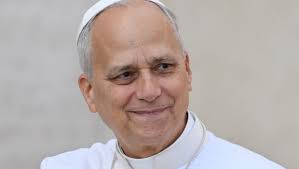
The tone didn’t change overnight—but people inside the Church noticed it.
A different emphasis. A quieter pivot. And a growing sense that something long-dominant was being moved out of the spotlight.
What Actually Happened
In recent remarks and internal messaging, Pope Leo has begun signaling a shift in how the Catholic Church frames its priorities—particularly around issues that have dominated headlines for decades.
Rather than centering discourse on sexual ethics and related controversies, the focus appears to be widening toward broader social, economic, and humanitarian concerns. This includes poverty, migration, global inequality, and environmental pressures—areas that had previously shared attention but not necessarily led the conversation.
According to reporting from Reuters, the shift is not being framed as a reversal, but as a recalibration of emphasis—one that could reshape how the Church engages with both its followers and the wider world.
Source: https://www.reuters.com/world/europe/pope-leo-signals-shift-away-catholic-churchs-focus-sex-2026-04-27/
Why This Moment Matters
For decades, the Church’s public identity has been closely tied to its positions on sexual morality.
That focus shaped not only theological debates, but also political alignments, media narratives, and internal divisions. Moving away from that center—even slightly—has ripple effects that extend far beyond doctrine.
It changes what gets attention. It changes what gets debated. And perhaps most importantly, it changes what the institution chooses to project outward as its defining concerns.
The Pattern Behind the Event
This shift fits into a broader, longer-term pattern within large institutions under pressure.
______________________________________________
🔴 Help keep this independent voice alive and uncensored -> Buy us a Coffee <-
When sustained controversy begins to define public perception, leadership often looks for ways to reframe the conversation—not by denying past positions, but by redirecting focus toward areas with wider consensus or urgency.
In this case, global instability, economic disparity, and humanitarian crises provide that alternative framework. These are issues that resonate across political and cultural boundaries, allowing the Church to engage in a different kind of global dialogue.
Where the Tensions Are Building
Not everyone within the Church is likely to interpret this shift the same way.
For some, it may represent a necessary evolution—an effort to remain relevant in a rapidly changing world. For others, it could feel like a dilution of core teachings or a strategic sidestep away from difficult internal debates.
That tension is unlikely to surface all at once. Instead, it may emerge gradually—through differences in messaging, regional interpretations, and the responses of clergy and lay communities.
What This Could Signal Next
If this direction continues, the Church’s global voice may begin to sound different.
Less focused on defining moral boundaries, and more oriented toward addressing systemic challenges facing societies worldwide.
That doesn’t erase existing doctrines. But it does shift the weight of attention—and in large institutions, attention often determines influence.
The question now isn’t whether the change is happening.
It’s how far it goes—and what gets left behind as the focus moves forward.
About the Author