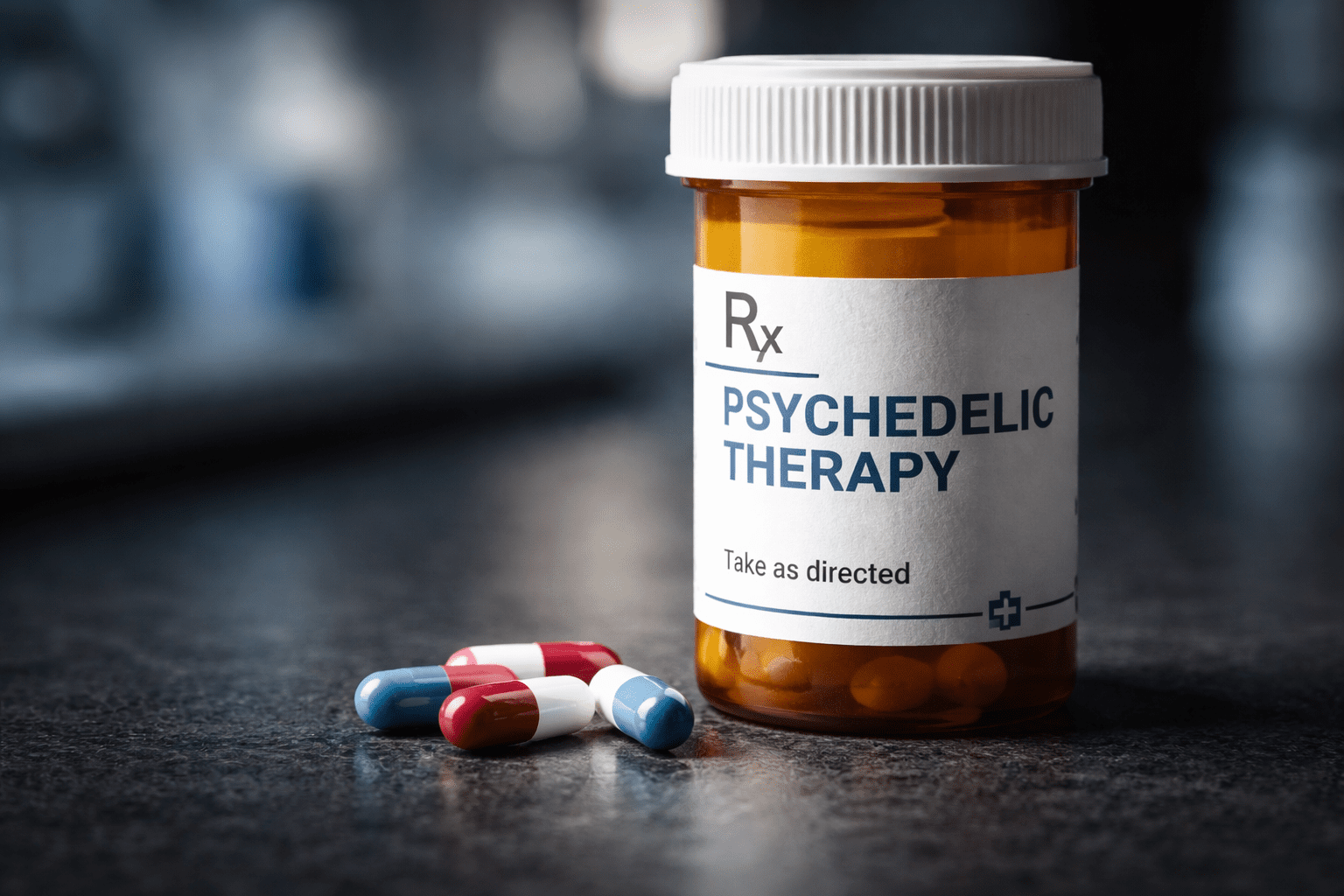
Something about the announcement felt unusually quiet for what could become a major shift in medical policy.
Buried beneath louder political headlines,
https://www.reuters.com/world/trump-announces-reforms-accelerate-access-psychedelic-drug-treatments-2026-04-18/
outlined a proposal that may reshape how governments approach mental health — not through new discovery, but through faster approval of substances that have been sitting in regulatory limbo for decades.
At first glance, it reads like a standard reform effort: reduce barriers, speed up trials, expand access. But the timing, and the framing, suggest something more layered.
Because this isn’t just about medicine.
It’s about pressure.
And the system is starting to show it.
—
Why is Trump pushing psychedelic drug reforms now?
The question many readers are quietly asking is simple: why now?
______________________________________________
🔴 Help keep this independent voice alive and uncensored -> Buy us a Coffee <-
Mental health systems across North America have been strained for years. Long wait times, limited treatment options, and growing dissatisfaction with traditional pharmaceuticals have created a gap — one that institutions have struggled to close.
Psychedelics, once dismissed outright, have slowly re-entered serious scientific conversation. Clinical trials involving psilocybin and MDMA have shown promising results for PTSD, depression, and treatment-resistant conditions.
But approval pipelines remain slow. Regulatory frameworks, built decades ago under very different political and cultural assumptions, haven’t kept pace with the research.
This is where the policy shift becomes interesting.
It doesn’t introduce something new — it accelerates something already underway.
And that suggests the pressure isn’t coming from innovation alone.
It’s coming from demand.
—
In recent years, public perception around psychedelics has shifted noticeably. What was once fringe is now discussed in mainstream medical journals, corporate wellness circles, and even among veterans’ advocacy groups.
A deeper look at
https://www.nature.com/articles/d41586-023-03063-4
shows a steady accumulation of evidence, not a sudden breakthrough. The science didn’t arrive overnight — it’s been building quietly, while policy lagged behind.
That gap between evidence and access may be where this reform is actually rooted.
Because when institutional response trails too far behind public need, policy tends to accelerate — sometimes abruptly.
—
The institutional response is catching up — but unevenly
There’s another layer here that isn’t being discussed as openly.
Not all parts of the system move at the same speed.
Healthcare providers, researchers, and private-sector investors have already begun positioning themselves around psychedelic therapies. Clinics, training programs, and funding initiatives are emerging, often ahead of formal approval structures.
Government policy, by contrast, has been slower — more cautious, more constrained by legacy frameworks.
This creates an imbalance.
And when policy finally moves, it often does so in compressed timelines.
That’s what this reform feels like.
Less like a beginning, more like a catch-up phase.
—
There’s also the question of economic pressure.
Mental health disorders carry enormous financial costs — not just in healthcare spending, but in lost productivity, disability claims, and long-term care.
A broader analysis from
https://www.who.int/news-room/fact-sheets/detail/mental-disorders
points to trillions in projected losses worldwide.
In that context, faster access to potentially more effective treatments isn’t just a medical decision.
It becomes a financial one.
And that shifts how governments prioritize action.
—
A pattern that goes beyond one policy
If you step back, a pattern starts to emerge.
First, public perception shifts — slowly, almost invisibly.
Then research accumulates, often outside mainstream attention.
After that, pressure builds — economic, social, institutional.
And finally, policy moves. Not gradually, but in a way that feels sudden.
This sequence isn’t unique to psychedelics.
It’s how many systems adapt when they’ve delayed too long.
What makes this moment different is the subject itself — substances that were once heavily stigmatized now being repositioned within official healthcare frameworks.
That transition isn’t purely scientific.
It’s cultural.
And cultural shifts tend to move unevenly.
—
What followed raised further questions.
How will access be regulated?
Who benefits first — patients, providers, or private investors?
And how will public trust respond when something long framed as dangerous is suddenly presented as therapeutic?
These aren’t technical questions.
They’re questions about governance, perception, and control.
—
For now, the reform sits in an in-between space.
Not fully implemented.
Not fully understood.
But clearly pointing toward a broader shift in how institutions respond to mental health — and how quickly they’re willing to change when pressure reaches a certain threshold.
The policy may move forward.
Access may expand.
But the deeper question remains unresolved:
Was this driven by breakthrough… or by backlog?
And if it’s the latter, what else is still waiting behind it?
About the Author