It shows up in the smallest places.
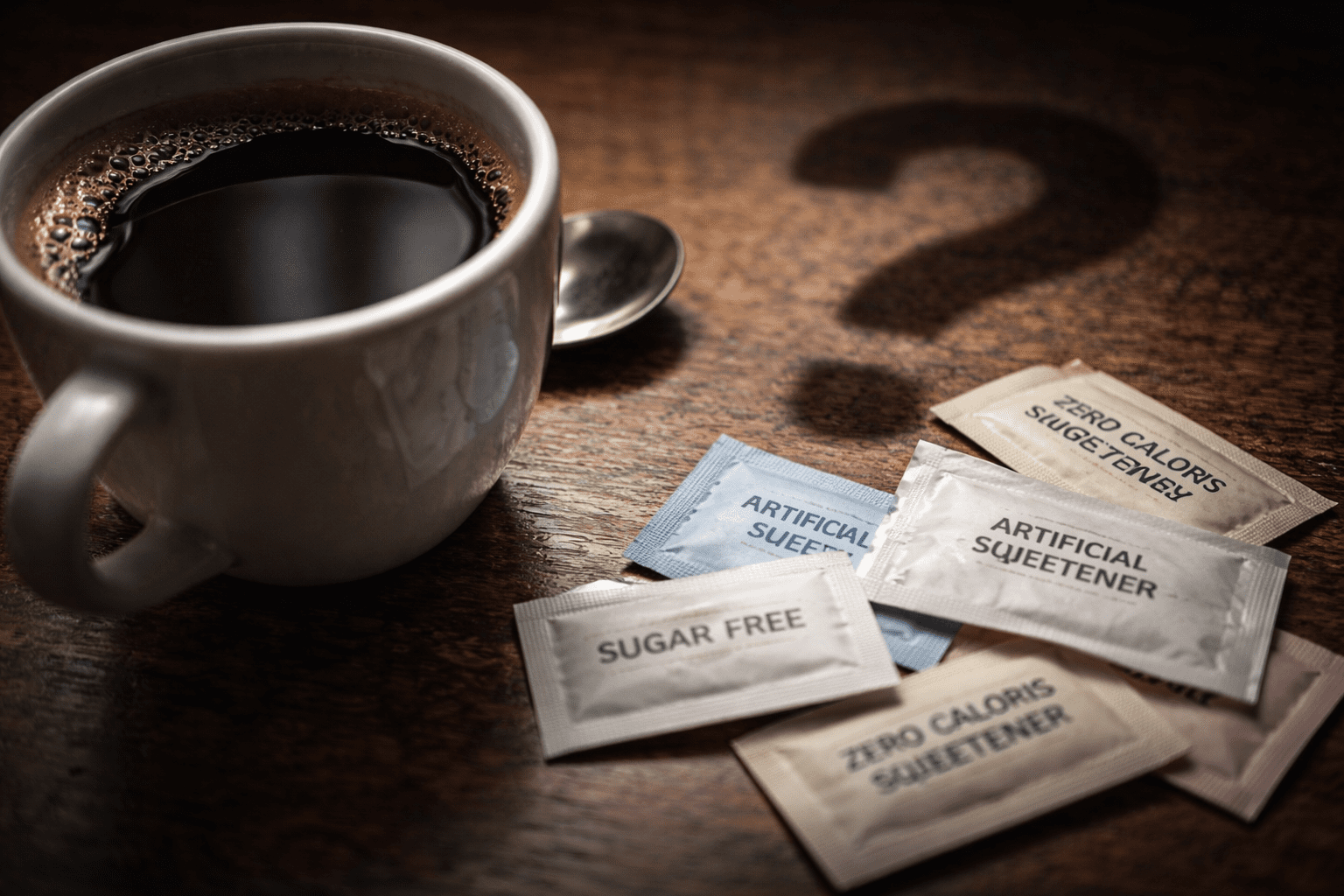
Coffee. Gum. That “sugar-free” label.
And now… a question that wasn’t there before.
The conversation around artificial sweeteners safety has started to shift — not loudly, not all at once, but just enough to feel it if you’re paying attention.
Something is being reexamined. Carefully.
The Study That Didn’t Cause a Stir
New research appears. It questions long-held assumptions. That should trigger debate.
But this time, the response feels… muted.
No widespread alarm. No immediate reversal of guidance. Just a quiet acknowledgment that something might not be as settled as it once seemed.
That’s not unusual in science. What’s unusual is how little traction it’s gaining outside narrow circles.
This becomes clearer when looking at how these findings are framed — cautious language, limited exposure, and a tendency to position them as preliminary.
Technically correct. But incomplete.
Artificial Sweeteners Safety and the Shifting Baseline
______________________________________________
🔴 Help keep this independent voice alive and uncensored.
Support independent journalism and help keep Chris Wick News going.
👉 Support Chris Wick on GoFundMe
There was a time when artificial sweeteners were treated as a breakthrough. A solution to sugar without the consequences.
That framing hasn’t disappeared. But it’s softened.
Now, there’s more emphasis on moderation. On long-term effects. On variables that weren’t part of the original conversation.
What happened next raised more questions — especially when newer studies began focusing not just on immediate outcomes, but subtle biological responses over time.
Not dramatic. But persistent.
Small Signals, Repeated
A similar pattern appeared in other areas of nutritional science. Early confidence. Broad adoption. Then, slowly, a narrowing of certainty.
It doesn’t happen overnight.
Instead, the edges start to blur.
The Pattern Beneath the Data
Most people won’t notice the shift. The products are still on shelves. The labels haven’t changed much.
But the language has.
Researchers aren’t speaking in absolutes anymore. Regulators aren’t either.
And when that happens, it usually means something is still being worked out behind the scenes.
This connects to a broader shift in how food safety is understood — less about definitive answers, more about evolving risk.
Not reassuring. Not alarming either.
Just… unsettled.
A Familiar Kind of Silence
There’s also the matter of attention.
Why hasn’t this become a bigger conversation?
Part of it may be fatigue. People have heard conflicting health advice before. Another study doesn’t always break through.
But part of it feels different.
More contained. More measured.
Almost as if the conversation is being kept within certain boundaries — not suppressed, but not fully expanded either.
And that’s where the tension sits.
What This Might Mean Going Forward
None of this proves artificial sweeteners are unsafe. Not definitively.
But it does suggest the story isn’t finished.
The certainty that once surrounded them has thinned. Not disappeared — just… less solid.
And when certainty fades, even slightly, it creates space.
For new questions. New findings. New interpretations.
Most people won’t adjust right away. They rarely do.
But a few will notice the shift early.
And once you see it, it’s difficult to unsee.
What just happened in nutritional research may change how this is understood.
A deeper look at this pattern reveals something unexpected.
This may connect to a broader shift that’s quietly underway.